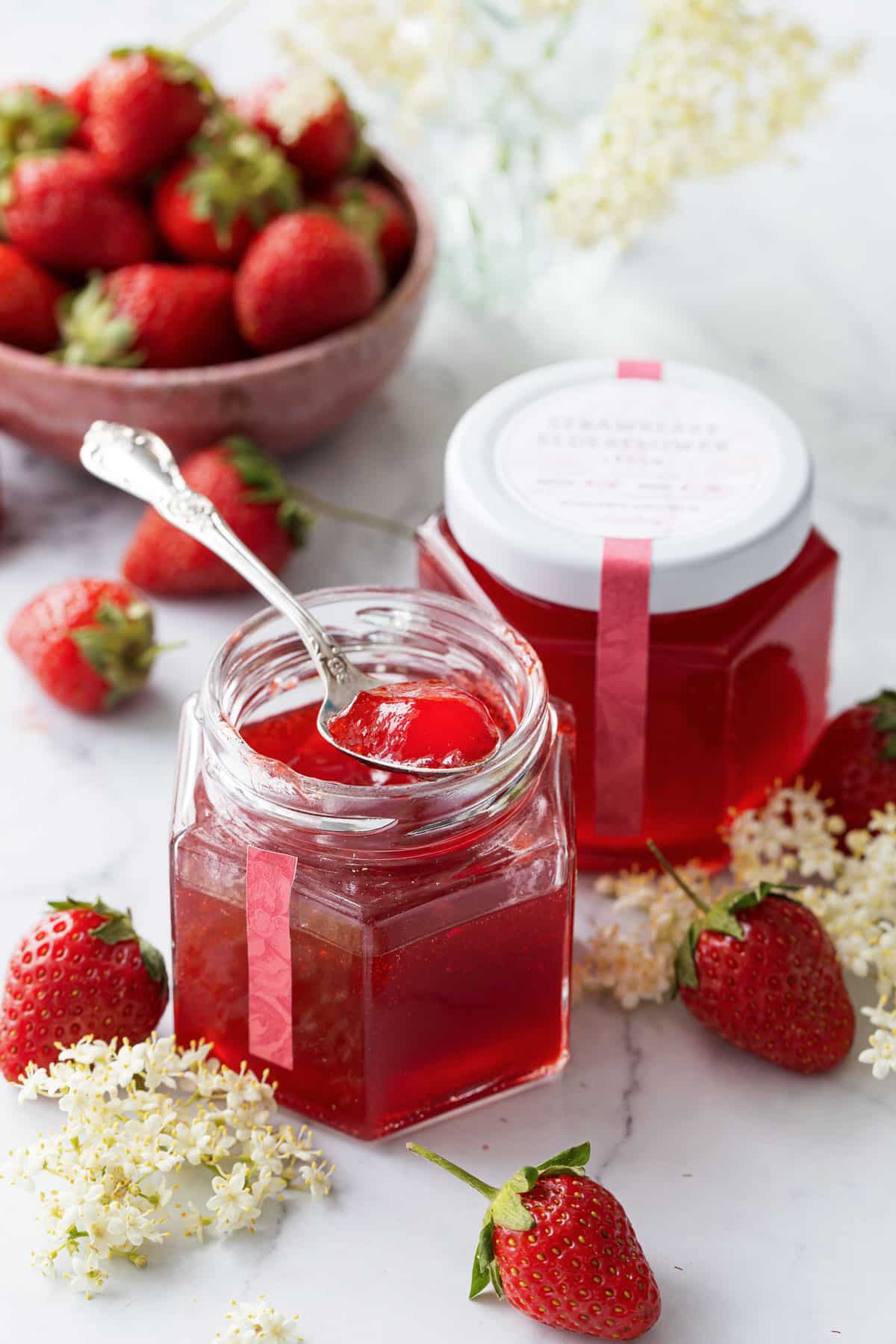
Strawberries, particularly perfectly ripe, just picked berries, often have subtle floral undertones. By adding flower-infused syrup to the strawberry juice base, we play up that floral characteristic, giving this flower-infused jelly a unique and complex flavor that tastes just like spring feels.
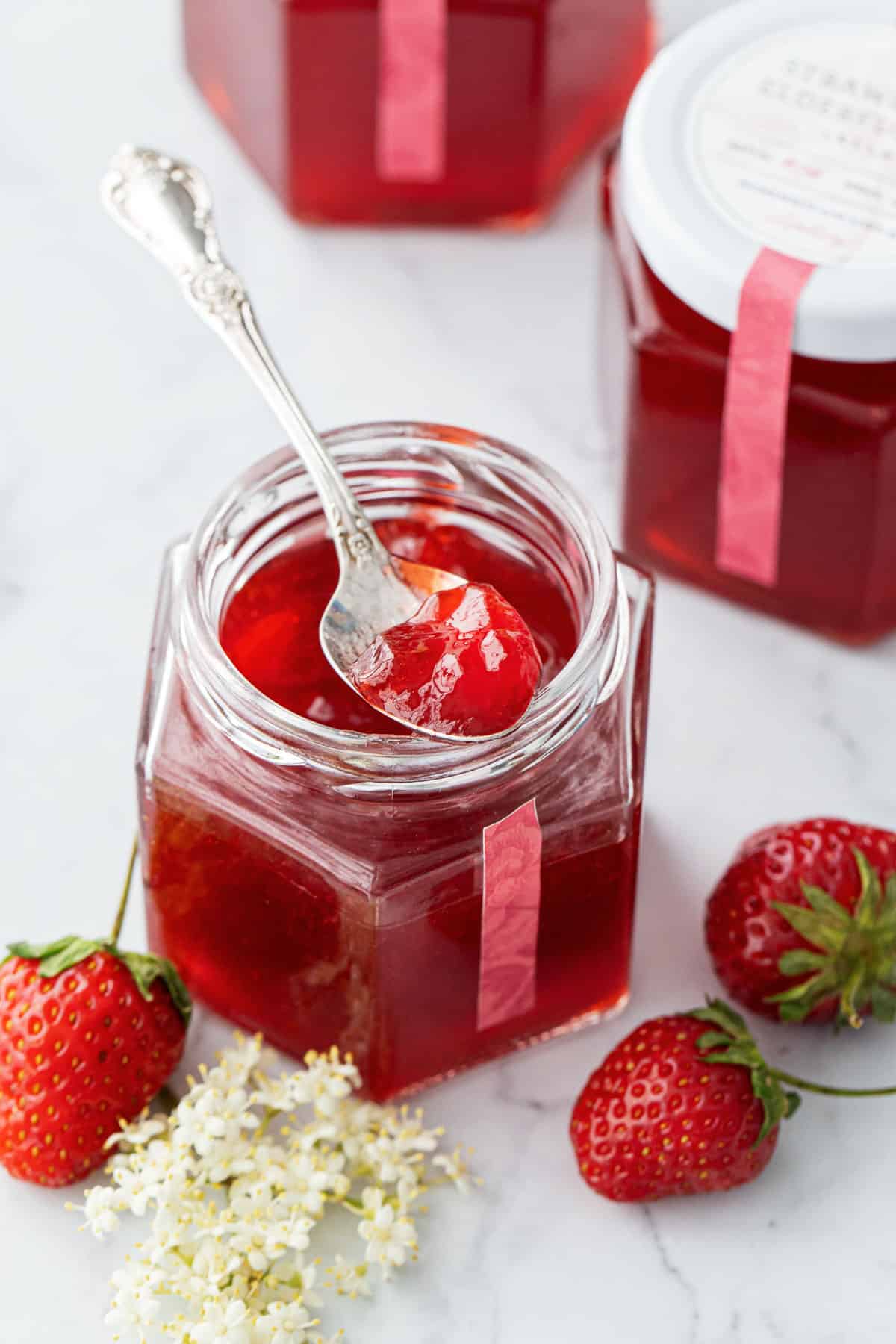
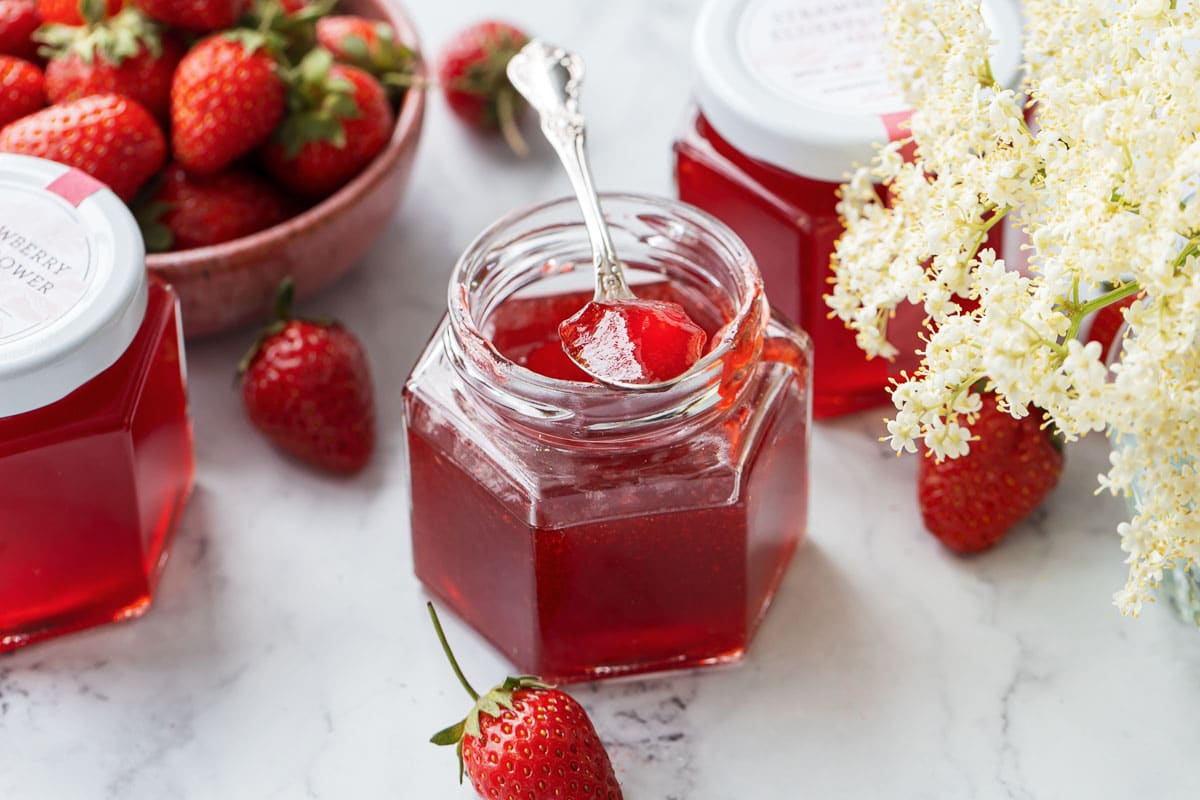
Made with fresh elderflowers, ripe strawberries and classic pectin for a ruby red, crystalline jelly with a subtle undertone of floral elderflower flavor. This small-batch recipe can be water-bath canned for shelf-stable storage, or refrigerated or frozen instead if you prefer.
Also included in this recipe is a variation for strawberry rose petal jelly using dried rose petals (or any other edible flower, really).
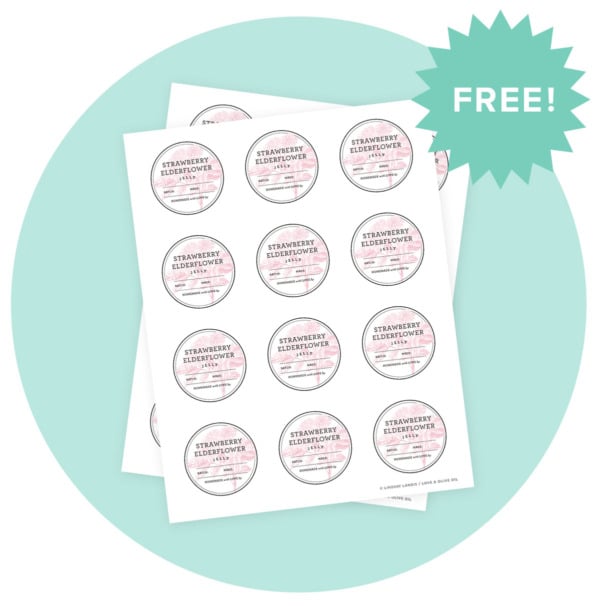
Don’t forget to scroll to the bottom of this post to download the free printable labels (both elderflower and rose variations included!)
Save this recipe for later!
I have so many strawberry jam recipes. I mean, how many is too many? Asking for a friend…
Without fail, every year I end up picking at least two baskets worth at the pick-your-own farm near us. I just can’t resist the lure of these springtime gems.
In lieu of yet another strawberry jam recipe, I thought I’d mix it up a little bit. Hence: strawberry jelly! The main difference between jelly and jam is strained fruit juice versus whole fruit (more on that below). If a smooth, even texture is your jam—excuse me, your jelly—then this recipe is for you.
Want More Jam Recipes?
Check out my new cookbook, That’s My Jam, with 52+ seasonal recipes for jams, jellies, marmalades & more!
I’m thrilled to have a source for fresh elderflowers in Nashville! Our good friend Hannah has a yard full of elder bushes, and last year invited us to come by and grab some (“Pick more!” she said, “the birds end up eating all the berries and poop purple all over the yard!”) Well, you don’t have to ask me twice! A quick 15 minute drive to get elderflowers is much easier than the cross-state transport I pulled off the first time I got my hands on some.
I actually first tested this recipe out last year with the flowers leftover from the strawberry elderflower tiramisu photo shoot (also from Hannah’s yard). But the season is so short that I wasn’t able to test it again, so I tabled it to test again this year.
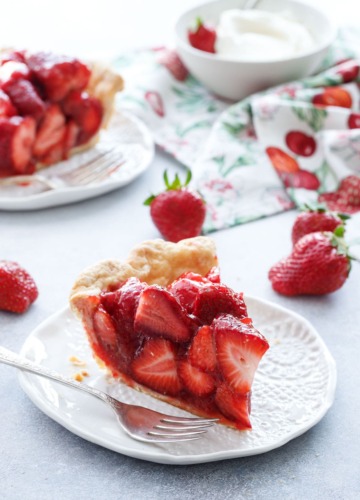
While it seems like it’d be an easy recipe to test, I had to figure out the best way to infuse the jelly with the most elderflower flavor (I also tested a version with rose petals because strawberry and rose are another wonderful combination, this gorgeous fresh berry pie is proof of that).
As simple as it sounds to toss some flowers into a pot of strawberry jam to steep for a while, you’ll just waste your precious flowers if you do. Instead, steep the flowers in a simple syrup (give yourself at least 24 hours for this step), and then add that flower-infused syrup to the jelly base. You’ll get way more flavor out of them that way!
Jam vs Jelly
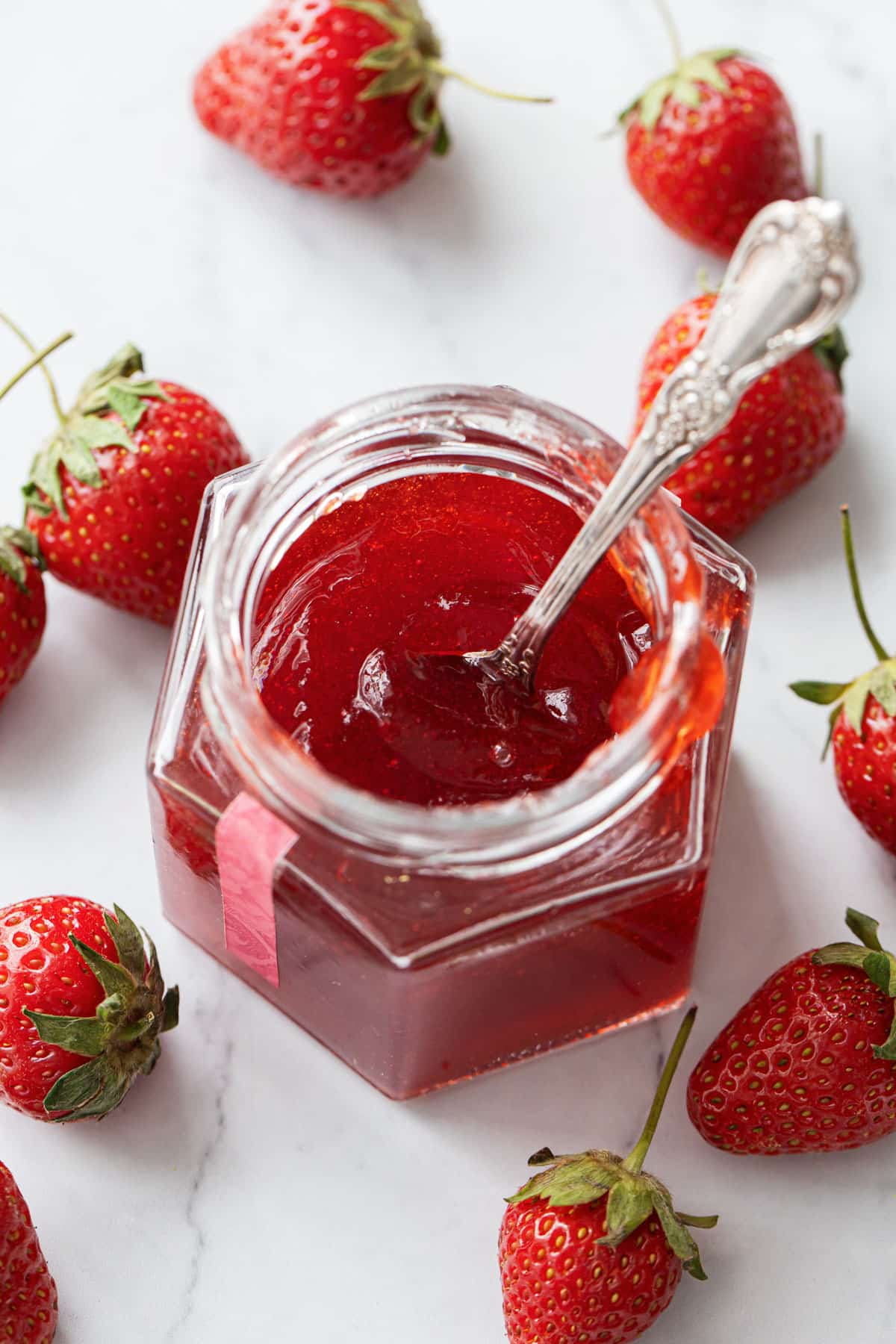
Jelly is made from strained fruit juice, while jam is made from the whole fruit. To achieve the clear crystalline appearance that’s typical of jellies, we’ll briefly simmer the mashed fruit and then strain it.
Could you make this recipe as jam? Sure! You’d basically just make a classic strawberry jam and then add your floral-infused syrup to it when you add the sugar. I’d recommend following a tested strawberry jam recipe for the proper process and sugar-to-fruit proportions specific to your pectin brand.
Sugar syrup is not a straight 1:1 replacement for granulated sugar; if you’re looking to reduce the amount of granulated sugar in a standard based on the amount of sugar syrup you’re using, it’s more like a 1:1.33 proportion (so 1 cup granulated sugar is equivalent to 1 ⅓ cups 1:1 sugar syrup [equal parts water and sugar by weight]). So if you’re using ½ cup of syrup, you can reduce the sugar by about 6 tablespoons.
Luckily, most jam/jelly recipes with standard pectin work totally fine with more sugar than the listed proportions. So you can safely add as much floral-infused syrup to your jam as you like without worrying about ratios.
Syrup to no good.
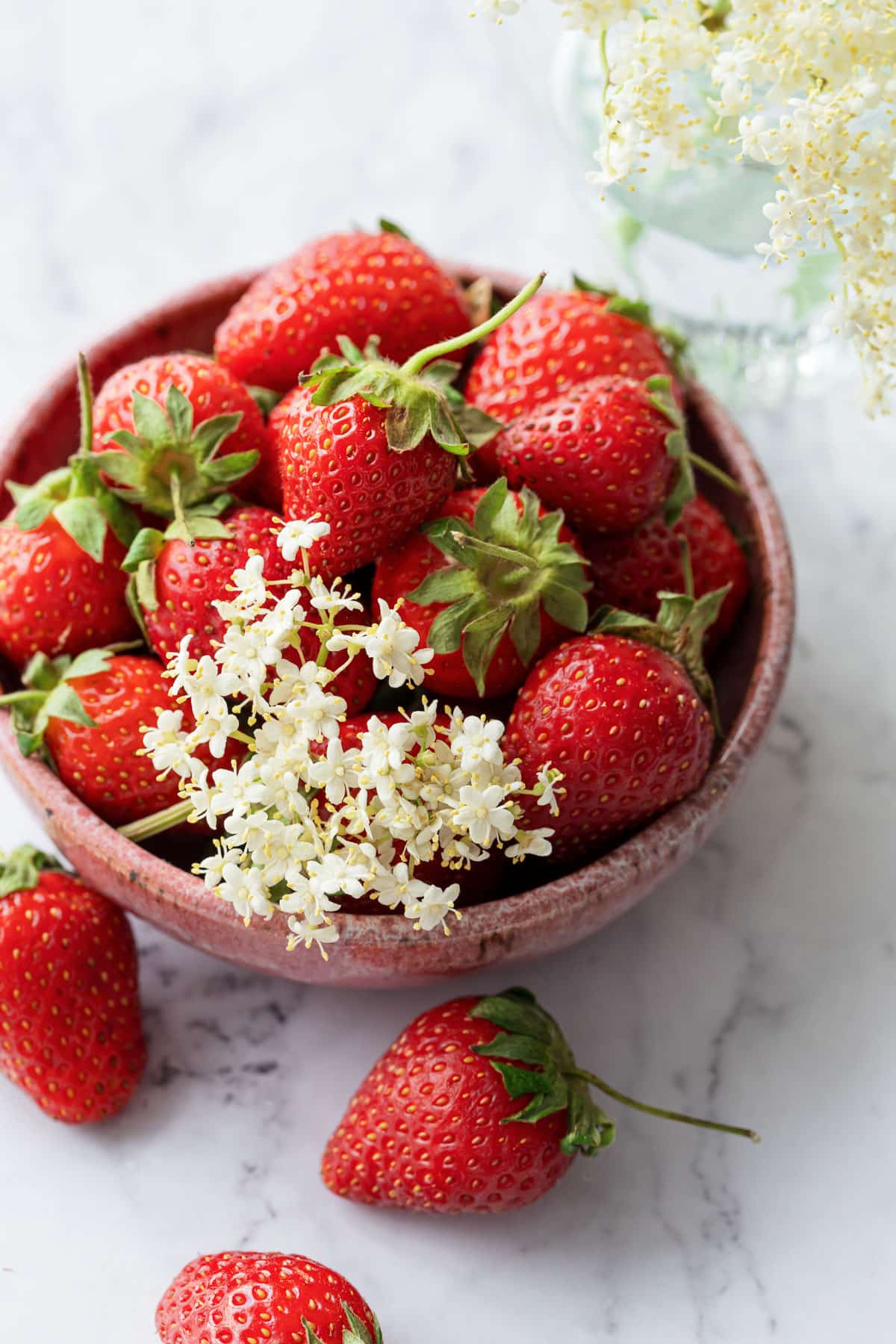
The first step in this recipe is to make a flower-infused syrup, which is then added to the jelly along with the sugar. You can make this syrup up to a week ahead of time if need be!
This syrup is added to the jelly along at the same time as the sugar. You can use as much or as little to achieve your desired flavor, and I recommend tasting as you go. I ended up using about 8 tablespoons of the elderflower syrup, and 6 tablespoons for the rose variation.
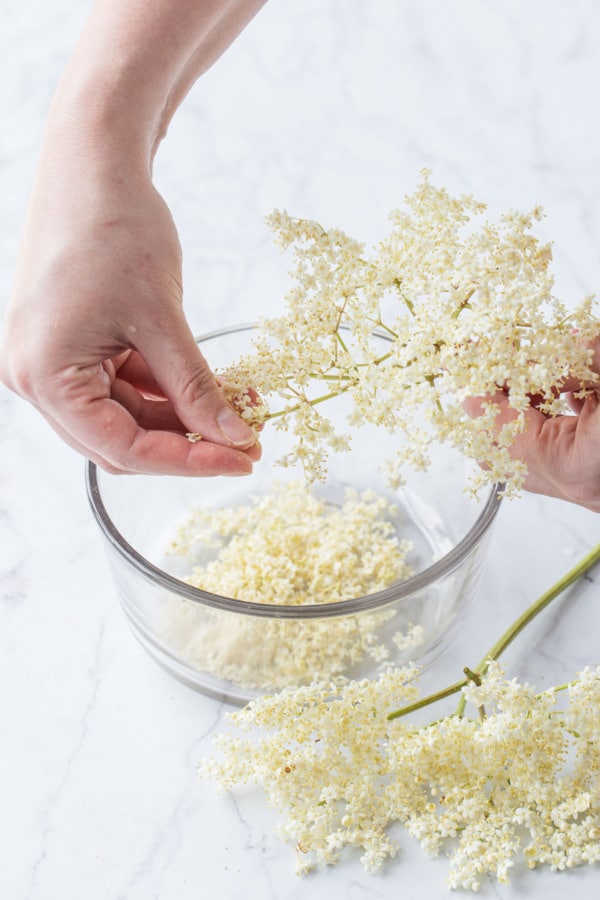
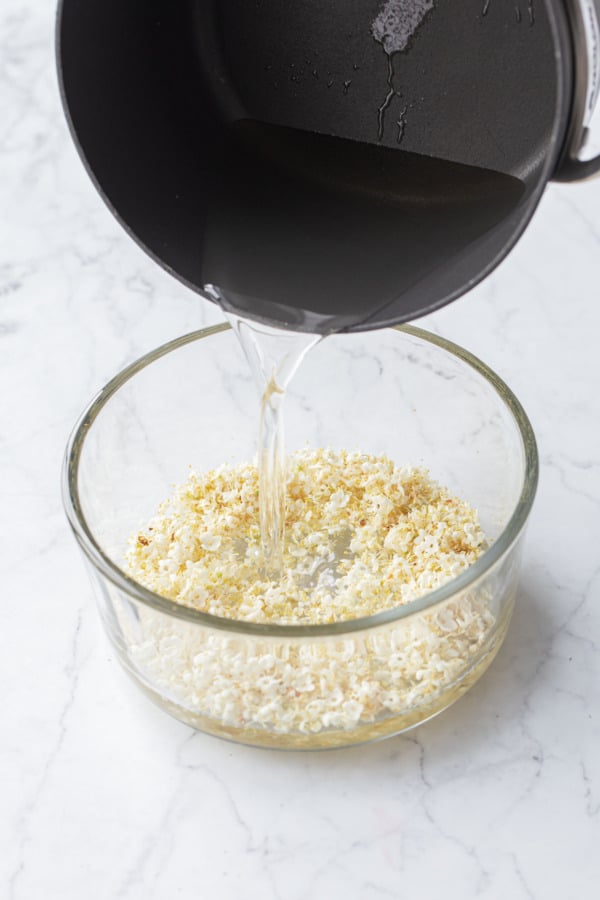
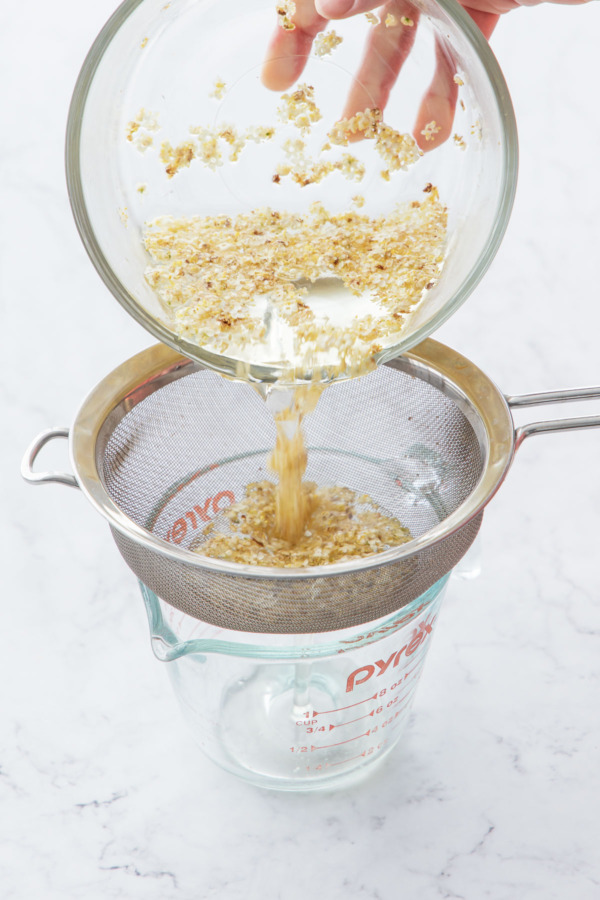
Why not just steep the flowers directly in the mashed fruit or fruit juice, you ask? Well, I tried that first, and the flower flavor was barely noticeable. Making a syrup first, with an extended steep time, pulls out more of the floral flavor so you’ll actually taste it in the final jelly.
Extra syrup? Save it! It’s great in place of simple syrup in cocktail recipes or mixed with soda for a refreshing spritzer.
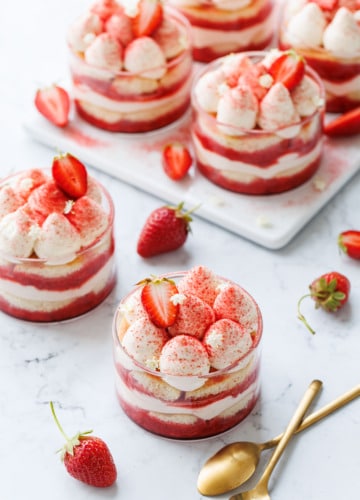
Could you use store-bought syrup here? Definitely, and I’ve used elderflower syrup in other recipes before like my strawberry tiramisu. It usually has a much stronger flavor than anything homemade, so start with a small amount and taste before you add more. I’d start with maybe 3-4 tablespoons and go from there.
While I haven’t personally used any rose simple syrups, if you happen to have one then by all means, use it! Probably best to start with 1-2 tablespoons as rose can have an unpleasant perfumey flavor if you overdo it.
If you want a little extra flower flavor, a splash of elderflower liqueur or rose water at the end will amp up the flavor even more. Go easy on the rosewater though, 1/4-1/2 teaspoon should be PLENTY for a full batch of jelly. No one wants potpourri flavored jelly on their pb&j sandwich!
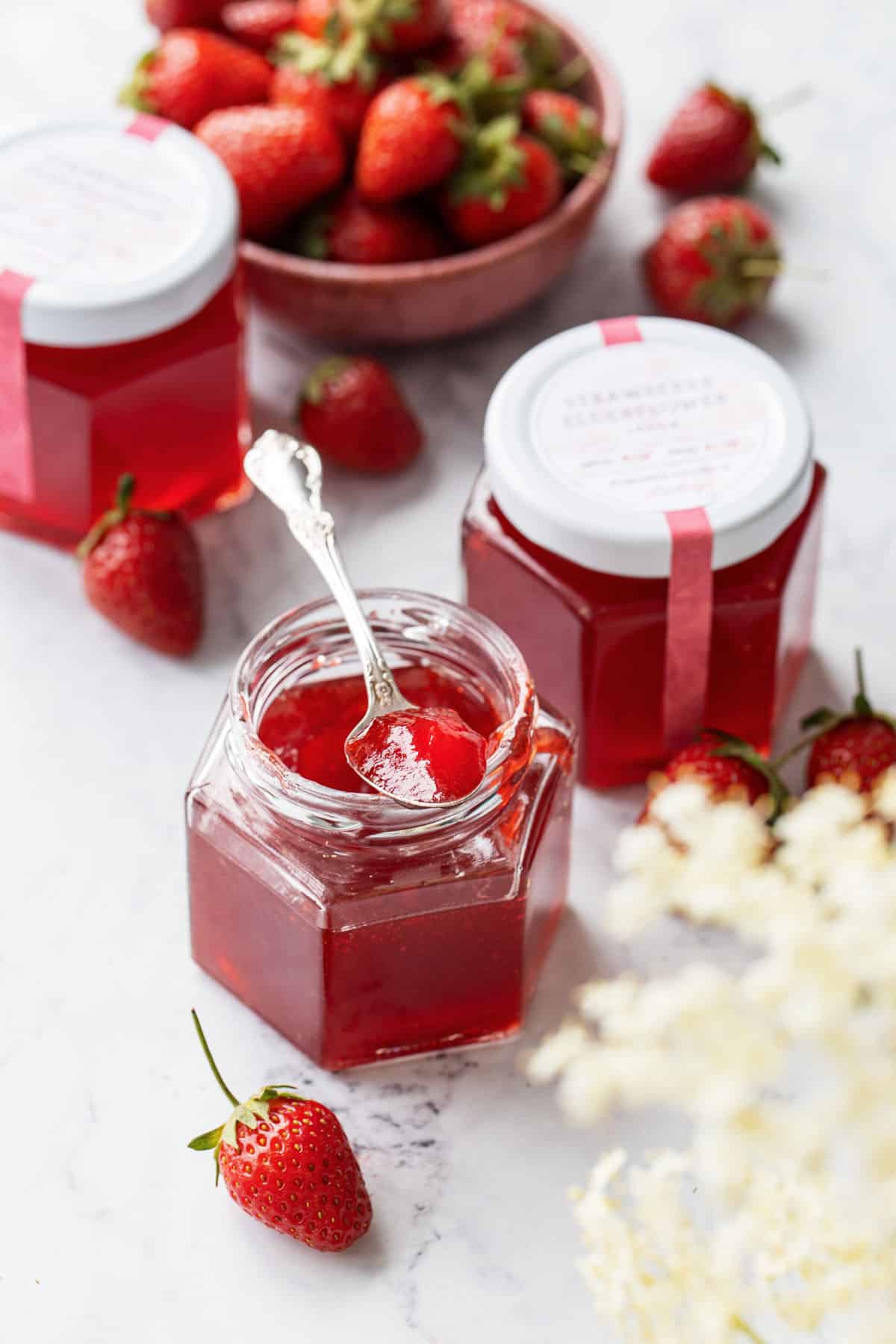
Clear as day.
One of the key characteristics of well-made jelly is a transparent, almost stained glass-like appearance.
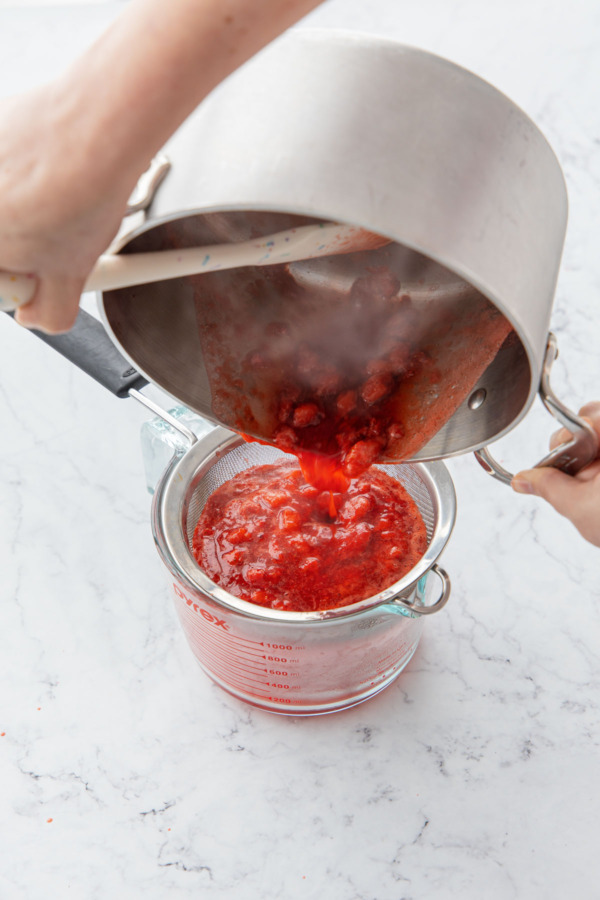
If you want perfectly clear jelly with no hint of cloudiness, strain the juice through a jelly bag or a double layer of cheesecloth set inside a sieve. Let it drip through naturally, don’t press or squeeze! This may take a few hours or even overnight. You will have a slightly lower yield this way, so I’d suggest using an additional 3-4 ounces or so of strawberries to make sure you get a full cup of juice.
If you’re ok with a slightly less than crystal clear appearance, you can press the fruit through a sieve to speed up the process a bit and increase the yield. Your final jelly will still be a gorgeous ruby red, just not quite as clear.
Leftover pulp? Don’t waste it! Use it in smoothies, swirl it into your breakfast yogurt, or make an easy fruit leather by spreading it thinly on a parchment or silicone-lined baking sheet then bake at 170 degrees F (the lowest your oven will go) for 1 to 2 hours or until most of the water is evaporated.
Fresh versus dried flowers
I tested this recipe with fresh elderflowers and dried rose petals. I’ve never really seen dried elderflowers, but I imagine they’d work just fine. You’ll need about 1/2 cup of fresh flowers, or 1/4 cup of dried. Conversely, if you have access to a fragrant rose bush you can verify hasn’t been sprayed with any nasties, you can use fresh rose petals in this recipe too.
While I’ve written this recipe for elderflower and rose flavor variations, you can use pretty much any edible flower. Lavender, chamomile, hibiscus, cherry blossom… the process is the same. The main difference will be in the amount of syrup you use in the final jelly (go easy on the lavender lest you want your jelly to taste like jiggly potpourri; other flowers are ok with a higher concentration).
Be sure to use culinary grade dried flowers or, if using fresh flowers, be sure they are organic and unsprayed. Most flowers sold in florist shops and grocery stores have been sprayed with pesticides and are not suitable for culinary use.
Pick a peck of powdered pectin
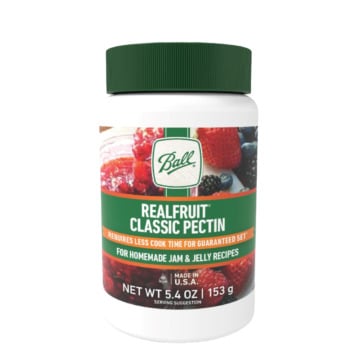
Since strawberries are a low-pectin fruit, it’s necessary to add pectin to achieve a proper set. This recipe is written for Ball Classic pectin, which is a bit more flexible in the amount of sugar you can use than other varieties of pectin.
If using SureJell pectin (yellow box), DO NOT reduce the sugar, and be sure to use at least 6 tablespoons of your flower syrup to keep the proper sugar-to-fruit juice ratio (or up the granulated sugar to 1 ¼ cups). If you try to reduce the sugar with this kind of pectin, your jelly will not set properly. The resulting strawberry syrup will still be plenty tasty, you’ll just end up drizzling it on your toast instead of spreading it.
If you have a different type of pectin (such as liquid pectin, or Pomona’s or other low-sugar pectin), please refer to the recipes included in the package insert and follow the specified process and proportions for strawberry jelly, adding the flower-infused syrup along with the sweetener as called for.
Scaling & Storage
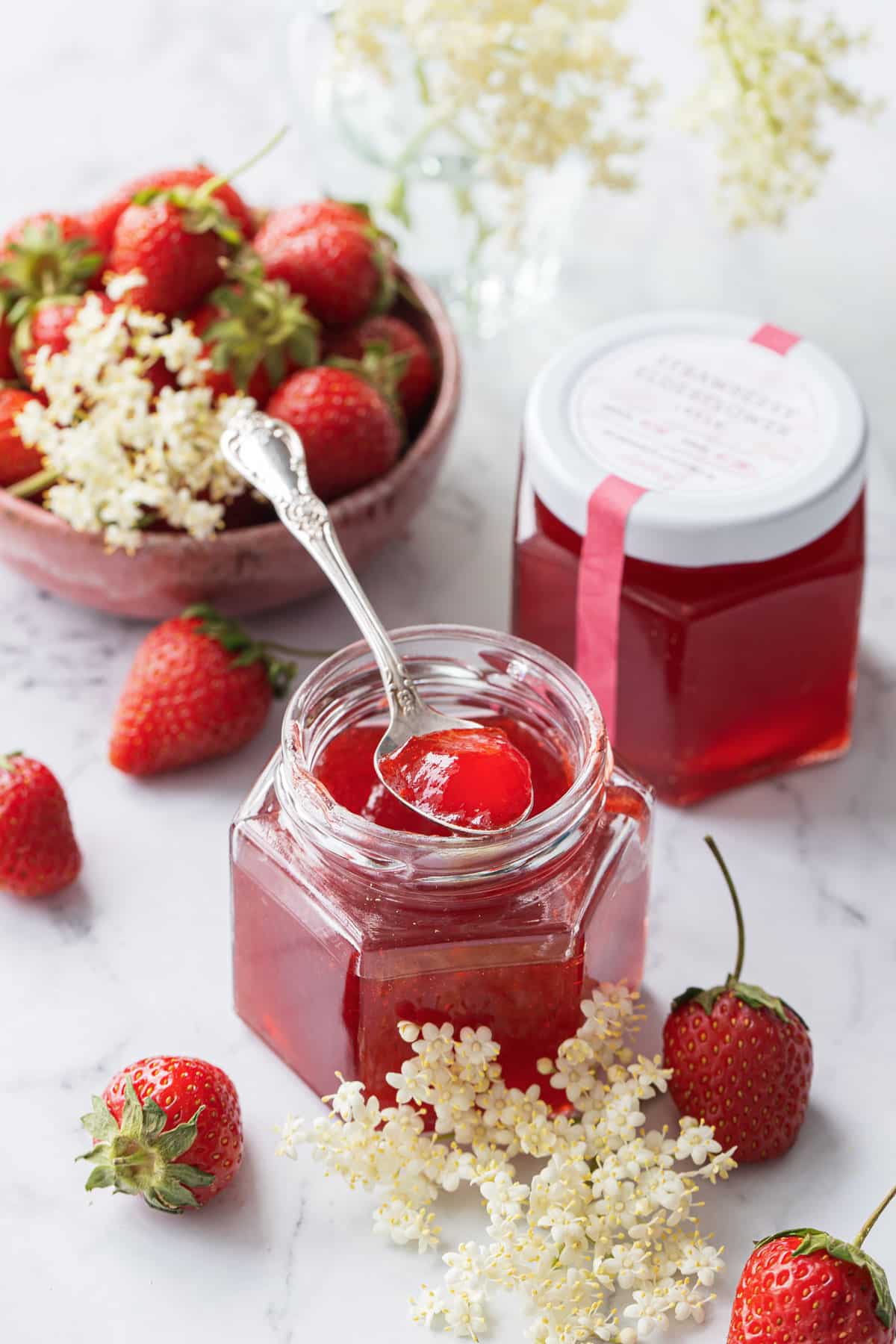
This is a small-batch recipe that calls for just over a pound of strawberries, and will give you about three 4oz jars of jelly, but feel free to double it for a larger batch.
It can be water-bath canned for storage of up to 1 year. Once opened, keep refrigerated and use within 2 weeks.
Alternatively, you can skip the canning step and refrigerate it for up to 2 weeks, or freeze it for up to 3 months (if freezing, be sure to use plastic containers or jars without shoulders and leave a bit more headspace to allow for expansion).
Strawberry Elderflower Jelly
Ingredients
For Flower-infused Syrup:
- ½ cup / 100 g granulated sugar
- ½ cup / 118 2/7 g filtered water
- ½ cup fresh elderflowers, or 1/4 cup dried rose petals
For Strawberry Jelly:
- 18 ounces / 510 g strawberries, hulled and coarsely chopped
- 2 tablespoons / 18 g Ball Classic Pectin*
- 2 tablespoons lemon juice
- 1 cup / 200 g granulated sugar
Instructions
- To make the flower syrup, bring sugar and water to a simmer in a small saucepan until sugar is completely dissolved. Pour into a heat-proof bowl or lidded jar along with flowers. Cover and refrigerate overnight or up to 1 week. Strain out flowers before using (you should end up with about 2/3 cup of syrup but won't need it all).
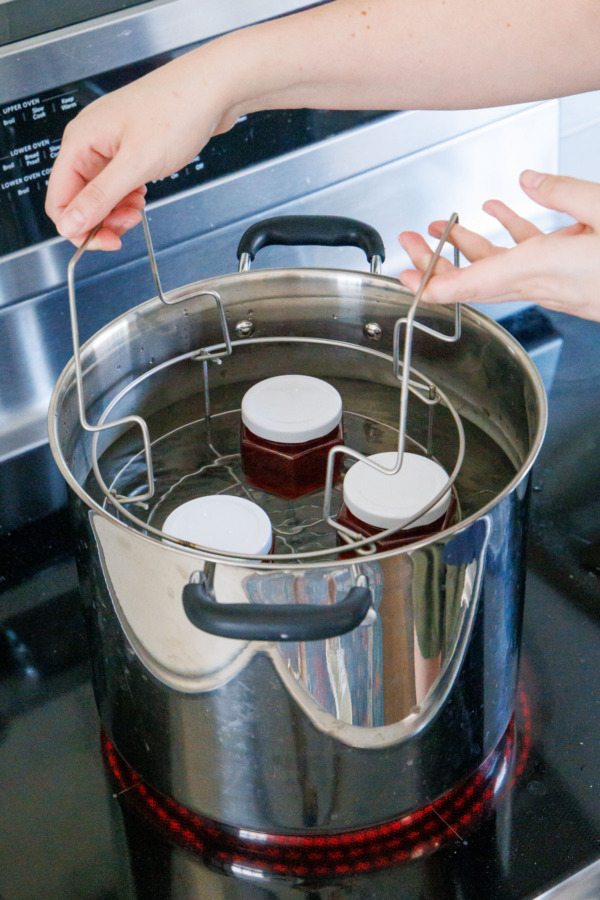
- If you will be canning your jelly, fill a large stock pot or canning pot 2/3 full with water; place a rack of some sort in the bottom and place over medium-high heat. Wash/sterilize your jars and submerge in water bath as it heats. The pot should be just about boiling by the time the jelly is ready to go. Keep jars in hot (not boiling) water until ready to use. This recipe can also be stored in the fridge or freezer if you don't want to can it.
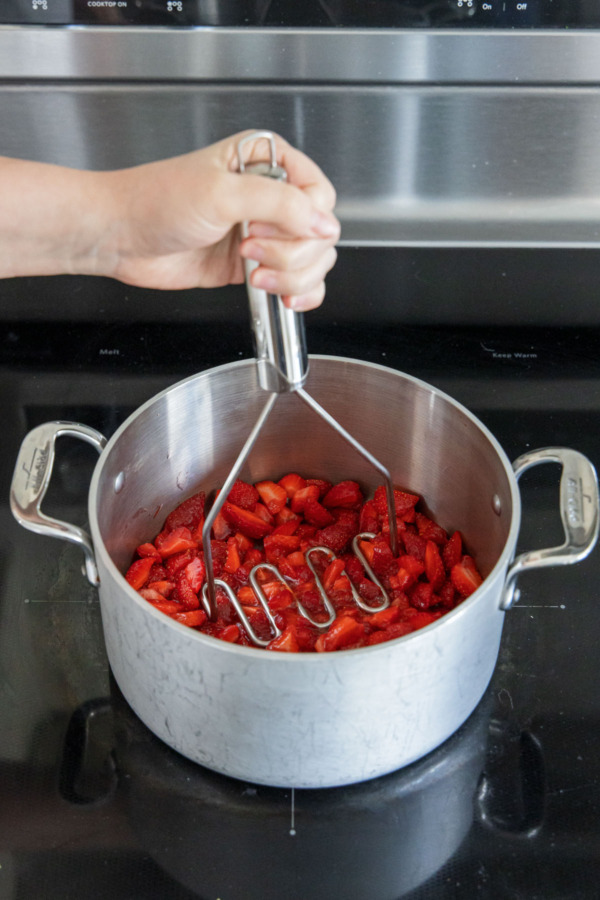
- Mash chopped strawberries with a potato masher, you should have a little over 1 3/4 cups of mashed berries.
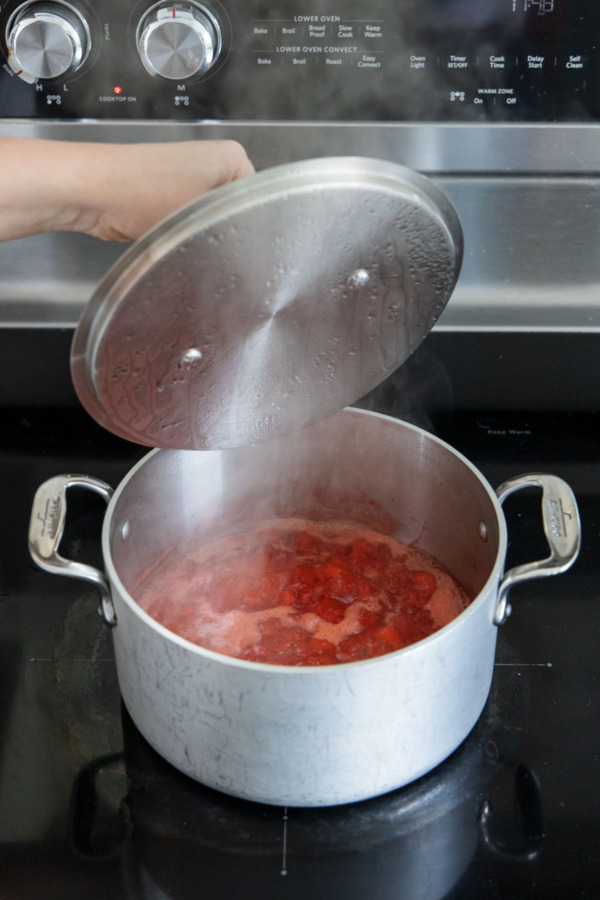
- Pour mashed strawberries into a medium sized heavyweight saucepan. Cover with a lid and let simmer for 5 minutes, then strain through a fine mesh strainer or, for a clearer jelly, a double layer of cheesecloth or a jelly bag. You should have 1 cup of juice.
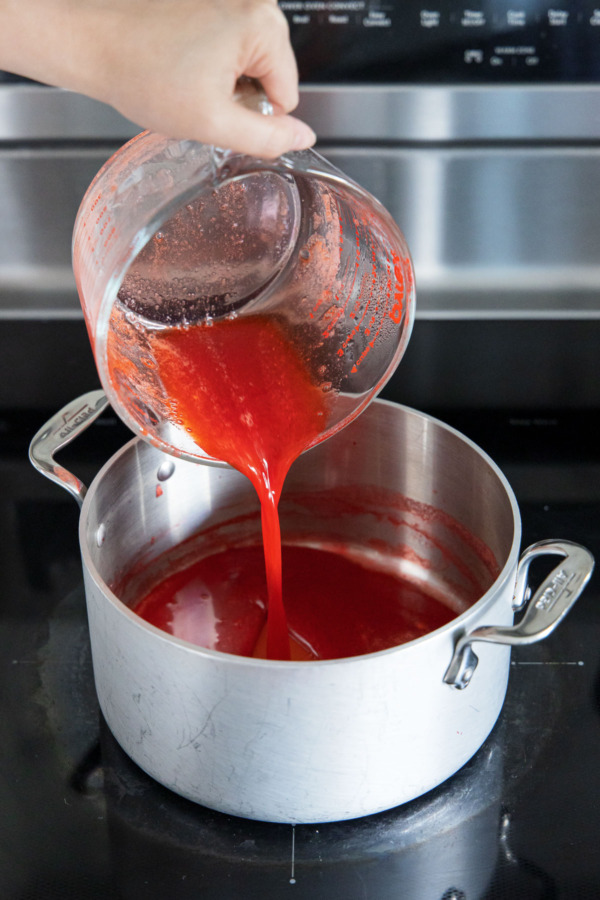
- Return strawberry juice to saucepan along with lemon juice and pectin, whisking well until pectin is completely dissolved.
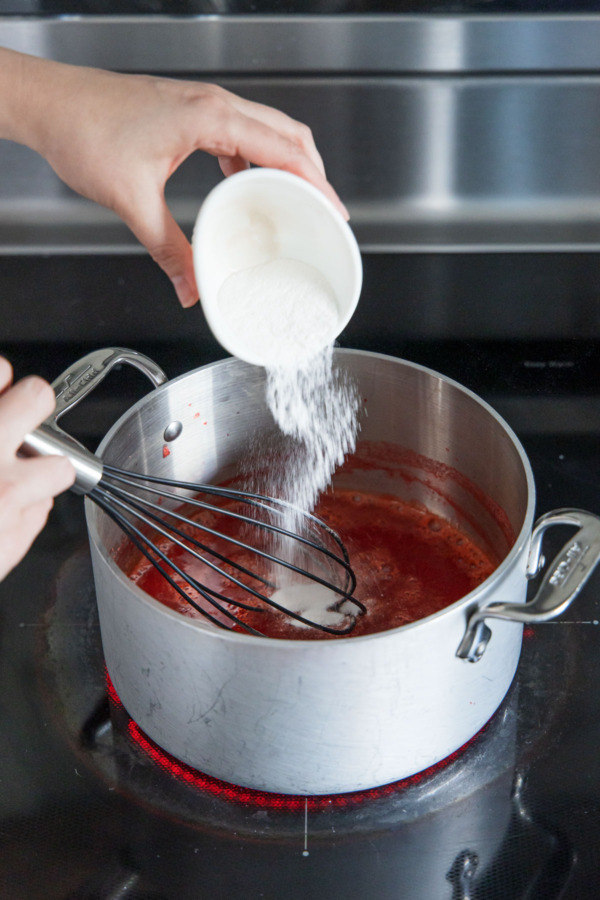
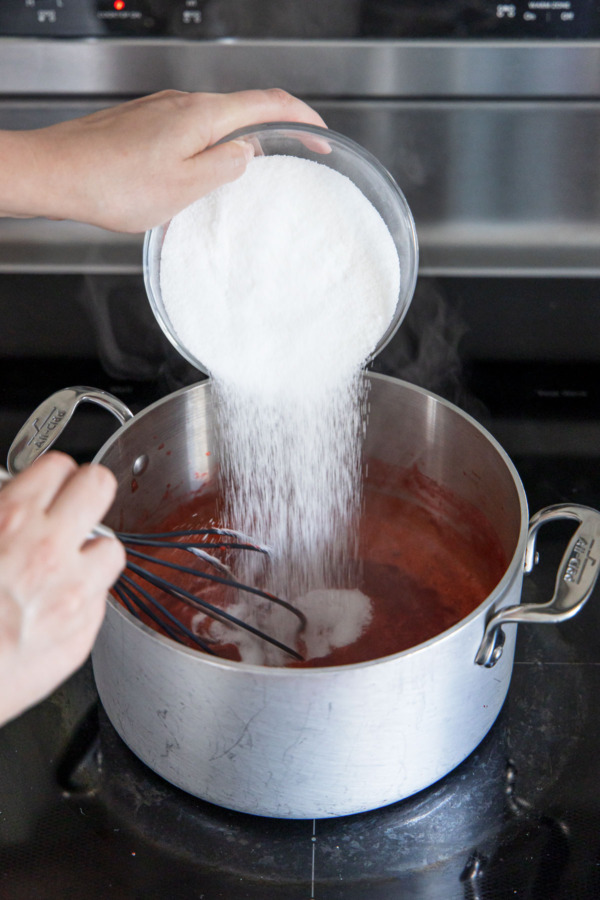
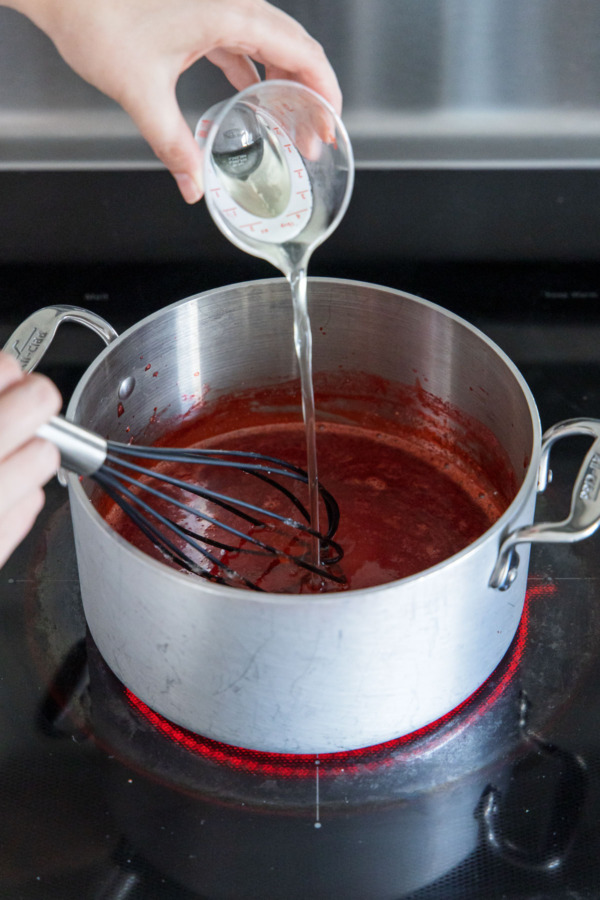
- Bring to a full rolling boil that cannot be stirred down, then whisk in sugar, stirring continuously until sugar is completely dissolved. Stir in 1/4 cup of strained flower syrup; taste, then add up to an additional 1/4 cup of syrup to achieve desired flavor (I ended up using 1/2 cup of elderflower syrup, or 6 tablespoons of rose syrup; leftover syrup can be refrigerated for another use.)
- Continue cooking, stirring occasionally, until jelly returns to a full rolling boil. Boil hard for exactly 1 minute, then remove from heat. Optionally, skim off any excess foam from the edges of the pan.
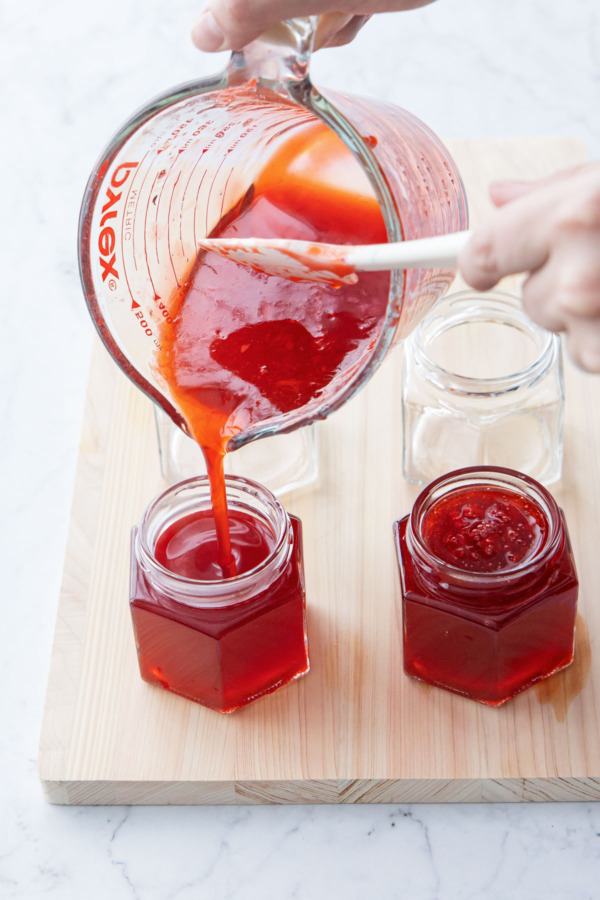
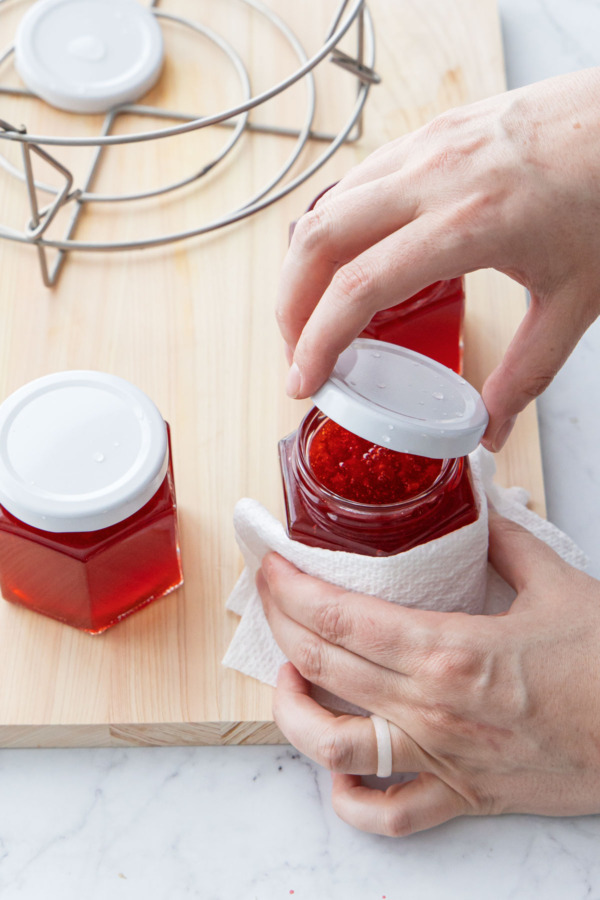
- Ladle jelly into hot jars, leaving 1/4-inch of head space. Wipe jar rims and screw on lids. Process in boiling water for 10 minutes, then transfer to a wire rack to cool completely. Check seals. Any unsealed jars should be refrigerated and used within 3 weeks.
Notes
- This recipe was written for Ball Classic Pectin. If using a different brand or type of pectin, please follow the basic strawberry jelly recipe and instructions inside your pectin package, and add the flower-infused syrup in with the sweetener. Pay attention to the order in which the ingredients are added and the proportion of fruit to sweetener recommended to ensure a proper set.
Did you make this recipe?
Let us know what you think! Leave a Review below or share a photo and tag me on Instagram with the hashtag #loveandoliveoil.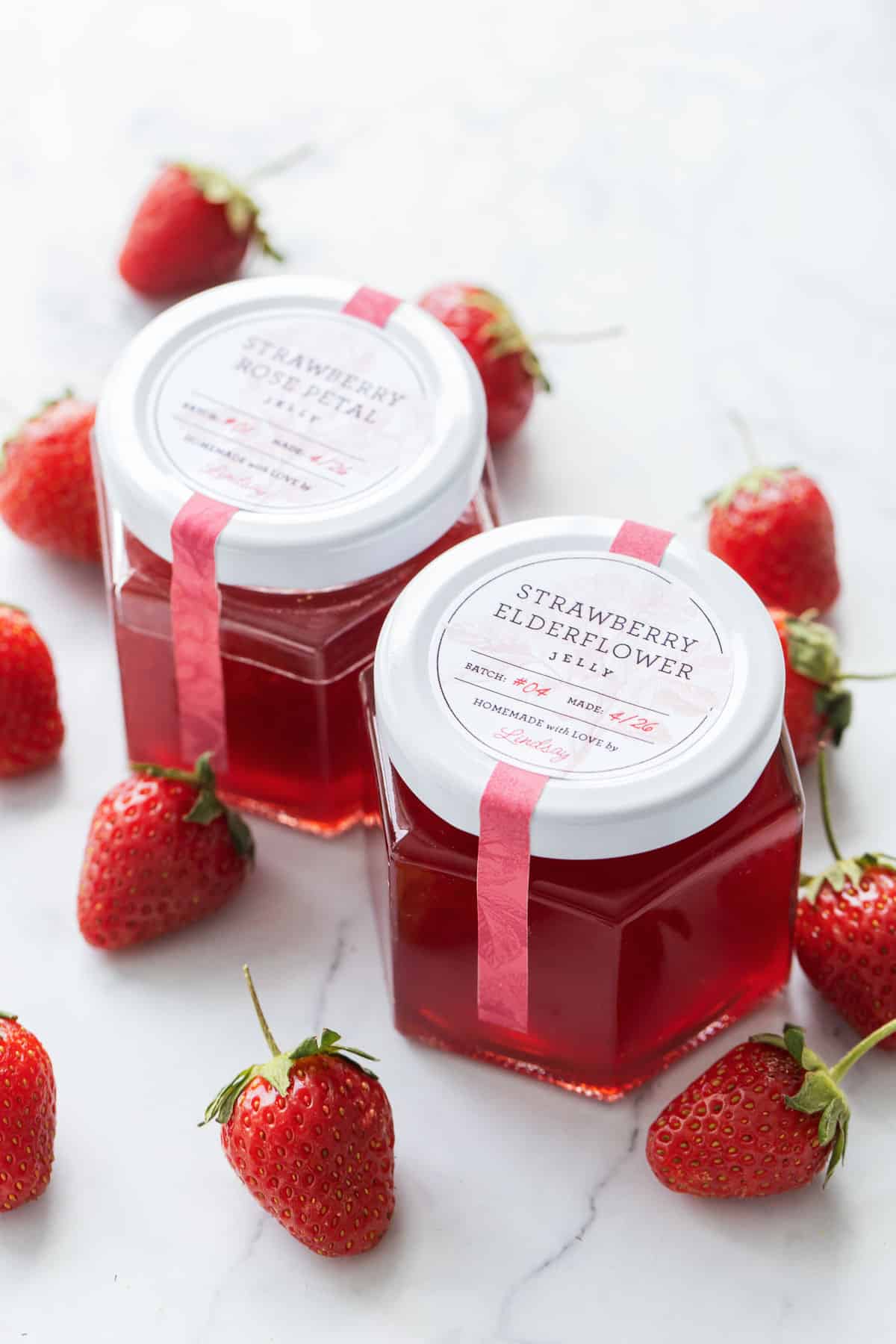
Free Printable Labels
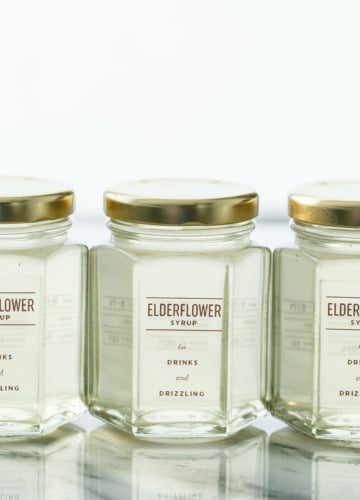
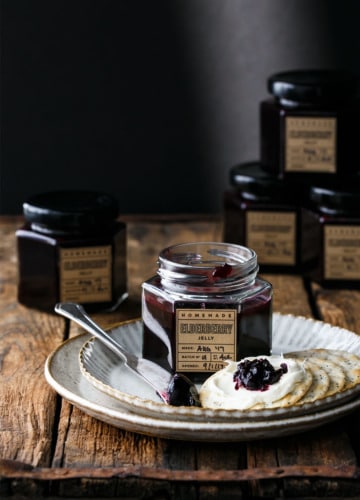
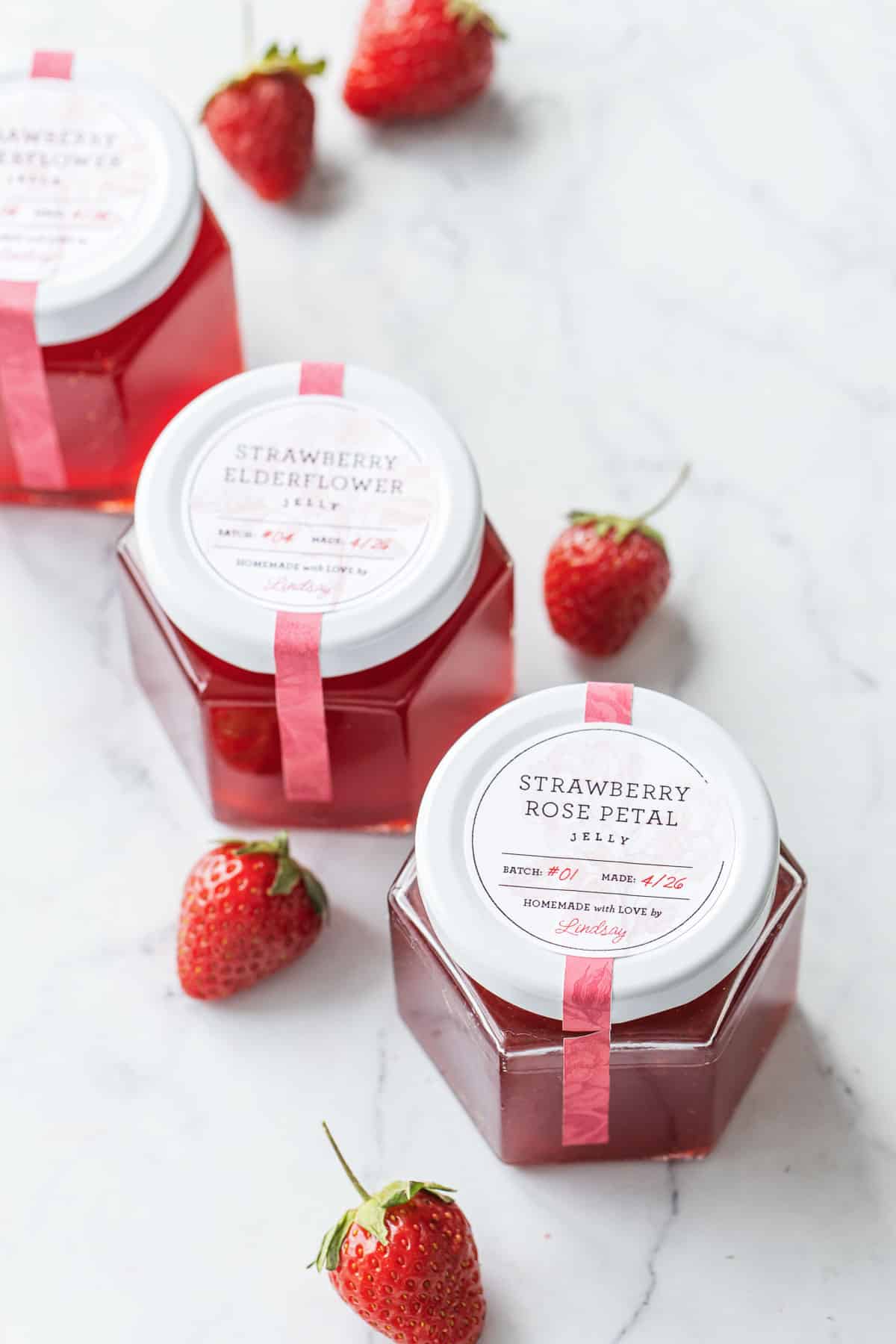
As always, the labels you see in this post are free to download and print yourself to make your jars gift-ready and extra-special.
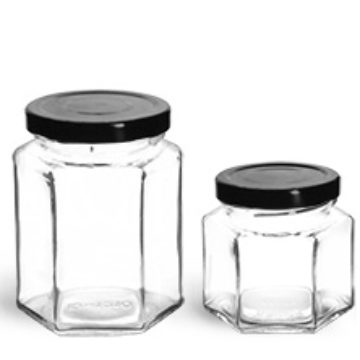
The free PDF download includes printable labels for both elderflower and rose petal variations, with 1.75″ round labels (for smaller jars like the 4 or 6oz hex jars I used) and 2″ round labels for standard size mason jar lids, as well as a separate page for the decorative bands.
Labels are designed to fit OL914 1.75″ labels or OL9684/Avery #94501 2″ labels, or you can print on full-sheet sticker paper and cut out the shapes yourself. You can also print onto cardstock, cut out and punch a hole to tie onto the jar lids like a gift tag.
While I haven’t converted these into editable templates for Canva/etc, I could be convinced to do so if enough people want them. :)
Free PDF Download
Enter your email address below to instantly download a convenient PDF file, ready for printing!