Bettie Landis’ Gingerbread Cookies

Bettie Landis's Holiday Gingerbread Cookies

As soon as Thanksgiving is over, the Christmas season begins. I’m talking about the second you put down your fork after that second slice of pumpkin pie. Not (as many retailers would like you to believe) sooner, not later. And for many (most?) of us, the best part about the holidays are the cookies. I’d give up a hundred candy canes for a single holiday cookie.

For years we’ve received boxes of gingerbread cookies from my aunt Sally. She slaves over a hot piping bag for what must be days, decorating gingerbread boys and girls for every member of the extended family. They are beautiful, her cookies, each one personalized with her artistic touch. Since Sally has mentioned to me on multiple occasions that I would one day take over this tradition, I figured I better get practicing. Lucky for me I had enthusiastic help, and my sister and I spent the majority of two days rolling, cutting, baking, and frosting dozens of cookies. (And what’ya know, Taylor actually picked up a piping bag and decorated a few, with surprisingly precise, and increasingly sarcastic typography. Just guess which one of the above morsels was his handiwork… that’s Taylor for you.)

Gingerbread Cookies Decorated with Royal Icing

This is the first time I’ve ever decorated anything with royal icing. It’s a bit tricky, and will definitely take a few more attempts before I feel like we’re really getting the hang of it. In my research, I did find a few very good resources and tutorials for making and using royal icing. If you’ve ever wanted to give it a go, I’d suggest reading these first:
- How to Make Royal Icing (with recipe and pictures)
- How to Flood Cookies with Royal Icing (the decorating technique used to get nice smooth frosted cookies)

Gingerbread Cookies

The gingerbread recipe itself is my grandmother’s. Bettie Landis was the queen of precision (much like I am the princess of sarcasm… if you get my drift). Her recipes are anything but precise, consistent, or complete. But that just might be the thing that makes these cookies so special. In fact, when I went to roll out and bake the cookies, I soon realized that the copy of the recipe I was using had no baking directions. No temperature, to bake time, no nothing. One quick call to auntie Sal later and I had instructions to bake at “about 350″ for “about 10-15 minutes, or you know, whatever”. Because that’s how we roll. I’ve elaborated a bit on the instructions for your sake, since not all of you have an auntie Sal you can call in a pinch.

Bettie Landis's Gingerbread Cookies

Makes about 40 large gingerbread men and then some (in other words, lots. Halve the recipe to keep your sanity).

Ingredients:

1/2 cup shortening
1 1/2 cups brown sugar
2 1/4 cups dark molasses (orange label)
7-10 cups flour*
1 1/2 teaspoons allspice
1 1/2 teaspoons cinnamon
1 1/2 teaspoons salt
2 1/2 teaspoons ground ginger
3/4 + 1/4 cup water
1 tablespoon baking soda

*We've seen versions of this recipe with as little as 6 cups and as many as 10. I used 8 and the dough was quite sticky. Use more flour for a stiffer cookie (say, for gingerbread houses), and less flour for softer cookies. It's very forgiving.

Directions:

Cream shortening and brown sugar. Add molasses and mix well.

Mix spices with 1 cup of the flour and add. Add the rest of flour about 1/2 cup at a time, alternating adding water and flour. Combine baking soda and final 1/4 cup water and add last.

Cover and chill dough for at least an hour before rolling out. (At this point you can also freeze the dough for up to a month. Thaw completely before rolling out.

Preheat oven to 350 degrees F.

On a well-floured surface, roll out dough to desired thickness (I found about 1/4 inch thick makes nice soft yet sturdy cookies) and cut out shapes. Arrange cookies on a parchment or silicone lined baking sheet.

Bake cookies for approximately 10-14 minutes or more (longer cooking times will yield stiffer cookies). Allow to cool a few minutes on cookie sheets, then transfer to cooling racks and cool completely before frosting.

Haricots Verts with Herb Butter

Haricots Verts with Herb Butter

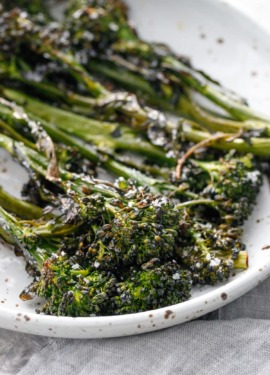
God forbid you don’t have something green on the plate at Thanksgiving… you just might go on a brown and tan overload. We like to stick to the traditional green bean, though not in the traditional form of a can-of-soup-and-onion-string casserole (something that has never appealed to me). This year we were able to pick up a bag of beautiful fresh haricots verts (pronounced harry-co-vair, or something, it’s french, you figure it out) Delicately thin and more tender than standard green beans, they cook in an instant and disappear off the plate even faster, though you could easily substitute standard green beans as well.

Herb Compound Butter

This recipe couldn’t be more simple. You can literally put it together in 2 minutes prior to eating. The compound herb butter can be made days in advance and refrigerated, then you simply toss the warm steamed beans with a few pats of it prior to serving. Simple and delicious. And since you’ve probably got your work cut out for you with everything else on Thanksgiving day, having one recipe that requires virtually no thought or effort whatsoever really helps.

(And this is the LAST Thanksgiving post until next year, I promise!)

Haricots Verts with Herb Butter

Makes 8 servings. Adapted from Epicurious.

Ingredients:

5 tablespoons unsalted butter, softened
3 tablespoons finely chopped shallots
3 tablespoons finely chopped flat-leaf parsley
2 teaspoons finely chopped thyme
1 1/2 teaspoons grated lemon zest
1 tablespoon fresh lemon juice
2 lb haricots verts or thin green beans, trimmed

Directions:

Stir together all ingredients except haricots verts with 3/4 teaspoon salt and 1/4 teaspoon pepper in a large bowl until combined well.

Cook beans in a large pot of boiling salted water (1 tablespoon salt for 6 quarts water), uncovered, until crisp-tender, about 6 minutes (alternatively, place beans in a microwave safe covered dish with a 1/2 cup of water. Cover and nuke for 2-3 minutes or until bright green and just tender). Drain. Toss with herb butter.

The Pumpkin Pie Incident

Thanksgiving Pumpkin Pie

Ok, so the final product might look fine. But you have no idea what it took to get to this point. A series of disasters the day before thanksgiving forced me to wake up on Thursday morning and bake a whole new pie early in the morning, before we had to put the turkey in the oven.

Take 1: Pre-made pie crust. Yes, I admit, I bought a premade pie crust. I battle with pie crusts, and figured might as well take it easy on myself this year. Took the roll out of the freezer and let it thaw, then unrolled it and draped it in my pie pan. It was only then (and not at the grocery store where I should have noticed), that this pie crust was made for a 9″ pie pan. My pie pans are 9.5″. Failure #1. Any attempt at stretching the overly-sticky crust only caused it to tear. Into the trash it went.

Take 2: Cookie pie crust. Lucky for me, I had seen a recipe earlier in the day for a chocolate chip cookie pie crust. I thought, it’s perfect! It sounds delicious, and it doesn’t require rolling. Sounds like my dream pie crust.

Not so fast.

Pumpkin Pie FAIL

Oh the horror!

We all watched in horror as the pie baked, and the crust kept getting bigger and bigger and the pie kept getting smaller and smaller. Not only that but the little center of pie filling that was left was completely soupy, it didn’t even begin to set even after well over an hour in the oven. So we gave up. And at that point it was 10:30 at night and I wasn’t about to start over again.

(Just a note that I WILL be trying this crust again. The concept of it is too delicious not to. But maybe I’ll skip the baking soda. That just *might* have had something to do with the mutant crust that came out of the oven…)

Onward!

Take 3: Woke up the next morning, and told myself to keep it simple. Used a basic pie crust recipe, and a soy version of the pie filling on the back of the Libby’s pumpkin can. It doesn’t get any more simple than that.

Pumpkin Pie Crust

Aside from some slight shrinkage when parbaked, this just might be the prettiest pie crust I’ve ever made. It did get a little soggy on the bottom underneath the filling, but overall a success.

As for the soy version, I do feel that substituting thickened soy milk for evaporated milk or cream in a pie recipe results in a slightly softer pie than you may be used to. It’s still delicious and doesn’t affect the flavor at all, but something about real dairy milk helps the pie set up. Which could have been part of the problem with my first version, who knows. But it works in a pinch.

I’m going to post the mish-mashed recipe I ended up using here, mainly for my own reference when I try to improve it next year. I’ve decided I need some more practice, and will probably try to make at least a handful of pumpkin pies and pie crusts throughout the year (which I’m sure Taylor will love – he’s the one always trying to sneak a bakery pie into the cart at kroger).

Pumpkin Pie

Makes 1 9.5 inch pie. Recipe adapted from Fine Cooking and LIBBY'S Famous Pumpkin Pie.

Ingredients:

Crust:
1/2 teaspoon salt
1-1/2 cups (6-3/4 oz.) unbleached all-purpose flour
10 tablespoons (5 oz.) cold unsalted butter, cut into 1-inch pieces

Filling:
1/4 cup granulated sugar
1/2 cup brown sugar, packed
1 teaspoon ground cinnamon
1/2 teaspoon salt
1/2 teaspoon ground ginger
1/4 teaspoon ground cloves
1/4 teaspoon ground nutmeg
2 large eggs
1 can pure pumpkin (not pumpkin pie filling)
1 1/4 cup thickened soymilk (water mixed with soymilk powder until it reaches the consistency of, well, thick soymilk?)

Whipped Cream (optional):
1 cup heavy whipping cream
2 tablespoons packed light brown sugar
1 teaspoon ground ginger
1 teaspoon brandy

Directions:

Make the crust: In a small bowl, stir the salt into 1/3 cup very cold water until dissolved. Put the flour in a food processor and scatter the butter on top. Pulse until the mixture forms large crumbs and some of the butter is in pieces the size of peas, about 8 pulses. Add the salt water and pulse until the dough begins to come together in large clumps, about 7 pulses.you’ll still see some butter pieces. Shape the dough into a 1-inch-thick disk, wrap in plastic, and chill for at least 1 hour or up to overnight.

On a lightly floured surface, roll the dough into a circle 16 inches in diameter and 1/8 inch thick. Transfer to a 9-inch ceramic, metal, or glass pie plate, easing the dough into the bottom and sides and then gently pressing into place. For a traditional crimped edge, trim the overhanging dough to 1/2 inch from the edge of the plate. Fold the overhang under and crimp decoratively. Wrap and refrigerate for at least 30 minutes or up to overnight, or freeze for up to 2 weeks.

Blind-bake the crust: Position a rack in the center of the oven and heat the oven to 400°F. Line the chilled pie shell with parchment and fill it with dried beans or pie weights. Bake until the sides have just set and look dry, 16 to 20 minutes (lift the parchment to check). Remove the weights and parchment and bake until the edges are light golden and the bottom is pale and completely dry, about 5 minutes. If the dough starts to bubble while baking, gently push the bubbles down with the back of a spoon. Let the crust cool completely on a wire rack before filling.

Preheat the oven to 425°F.

Make the filling: Combine sugar, cinnamon, salt, ginger and cloves in small bowl. Beat eggs in large bowl. Stir in pumpkin and sugar-spice mixture. Gradually stir in soymilk. Pour into pie shell. Bake at 425°F for 15 minutes. Reduce temperature to 350°F; bake for and additional 40 to 50 minutes or until knife inserted near center comes out clean. Cool on wire rack for 2 hours. Serve immediately or refrigerate.

Make the cream just before serving: Whip the cream with an electric mixer on medium-high speed until it forms very soft peaks, about 2 minutes. Add the sugar, ginger, and brandy and continue whipping until it forms medium-firm peaks, about 30 seconds longer. Dollop in the center of the pie, leaving a band of filling visible around the edge of the pie, or dollop on individual servings.

The Definitive Roasted Garlic Mashed Potatoes

Ultimate Roasted Garlic Mashed Potatoes

I know you’re all probably sick of Thanksgiving food by now. You’ve probably exhausted your leftovers, and gag at the mere mention of turkey. But you’ll thank me next year (and I’ll thank me next year too!) when you can come back to these posts to help you plan your perfect Thanksgiving feast. And don’t worry, I only have a few more turkey day posts left, including a pie disaster you have to see to believe. You just wait.

These potatoes are good. So good we’ve made them 3 years in a row without hesitation. We’ll probably make them again next year too. You just don’t mess with something this good.

Why are they so good? Well, it probably has something to do with the two heads of roasted garlic or the three full sticks of butter (which we actually reduced to 1 1/2 and it was still decadent). That could be it.

The Definitive Mashed Potato with Roasted Garlic

Makes: 8 servings. Recipe from Michael Chiarello.

Ingredients:

For the Garlic Paste:
2 whole garlic heads
1/2 cup pure olive oil
Gray sea salt and freshly ground pepper

2 pounds Yukon Gold potatoes
1 1/2 sticks unsalted butter, at room temperature
1-2 tablespoons garlic paste, more or less to taste
1 1/2 cups heavy cream
Sea salt, preferably gray sea salt, and freshly ground black pepper
1/2 to 2/3 cup extra-virgin olive oil

Directions:

Start with the roasted garlic: Preheat the oven to 350 degrees F.

Peel the outermost layers of skin off the heads of garlic. Cut off the top 1/3 of the heads to open the cloves. Heat olive oil in a large oven-safe saute pan over medium heat. Add garlic, cut sides up, and saute for about 10 minutes. Season with salt and pepper. Transfer pan to the oven and roast for 15 minutes. Alternatively, drizzle cloves with olive oil, and sprinkle with salt and pepper. Wrap in aluminum foil and cook for 30-45 minutes, or until soft (almost mushy) and golden. Remove from heat and let cool. Pop garlic cloves from their skins and place cloves in a food processor, along with 1/4 cup olive oil. Puree until smooth; you should have a paste-like consistency.

For the potatoes: Peel and cube the potatoes. Then put the potatoes in a large saucepan with salted cold water and place in the refrigerator overnight (or 30 minutes. whatever you have time for!). Add some more salt and then bring to a boil over high heat. Cook until tender, about 10 minutes. Drain well and return to pot. Over very low heat, stir and mash the potatoes. Doing this over low heat will let the remaining water evaporate out of the potatoes, making for an even fluffier final product.

Meanwhile, heat 1 tablespoon of the butter in a large saucepan over medium heat until the butter stops foaming and turns a light brown. Add the garlic paste and cook quickly. Add the cream, season, to taste, with salt and pepper, and bring to a boil. Reduce the heat to low and fold cream mixture into potatoes with a wooded spoon or large whisk. Add the remaining butter by tablespoons, stirring after each addition. Stir in the extra-virgin olive oil. Season with salt and pepper, to taste, and serve.