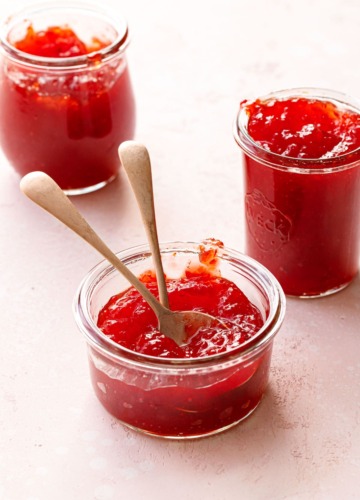
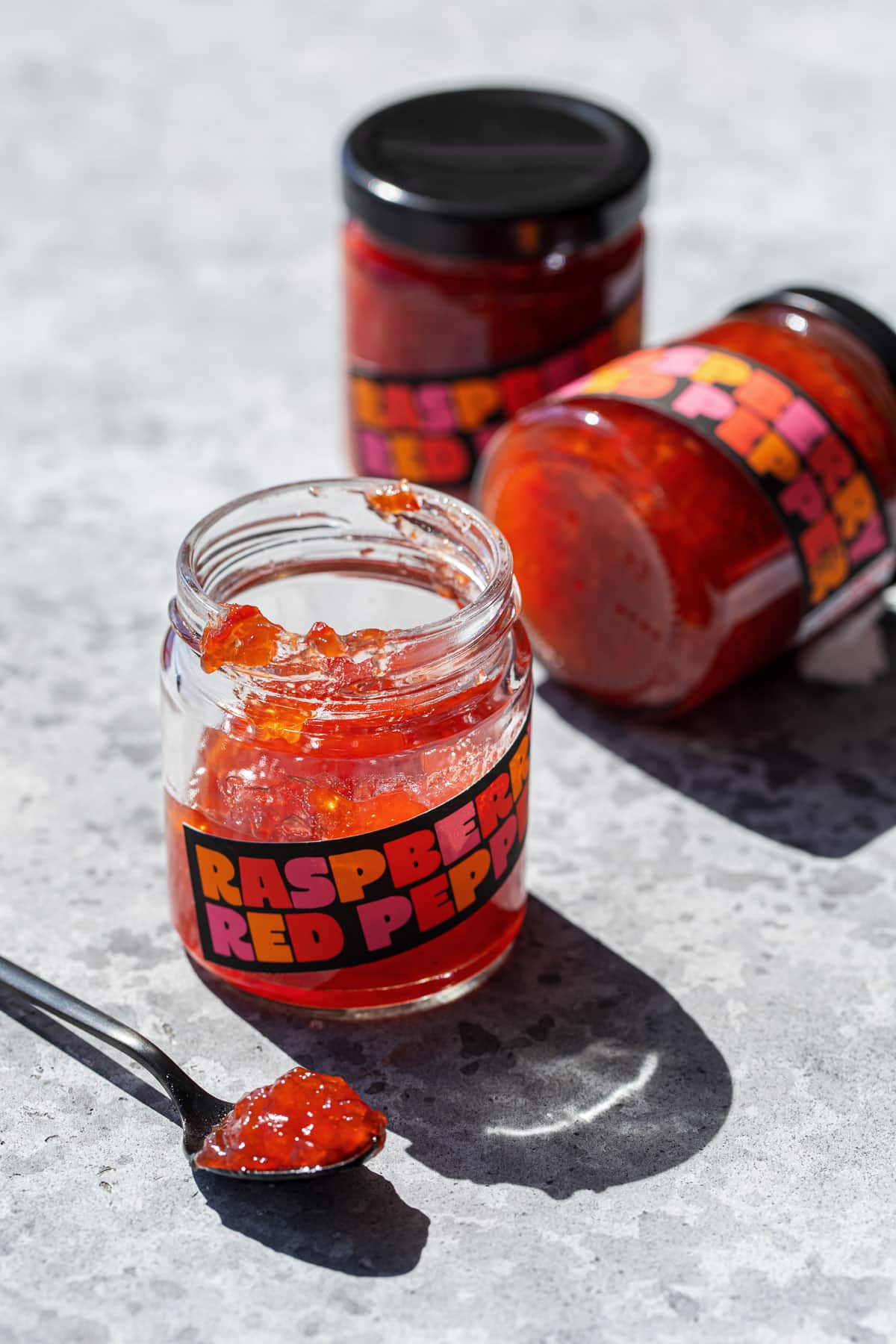
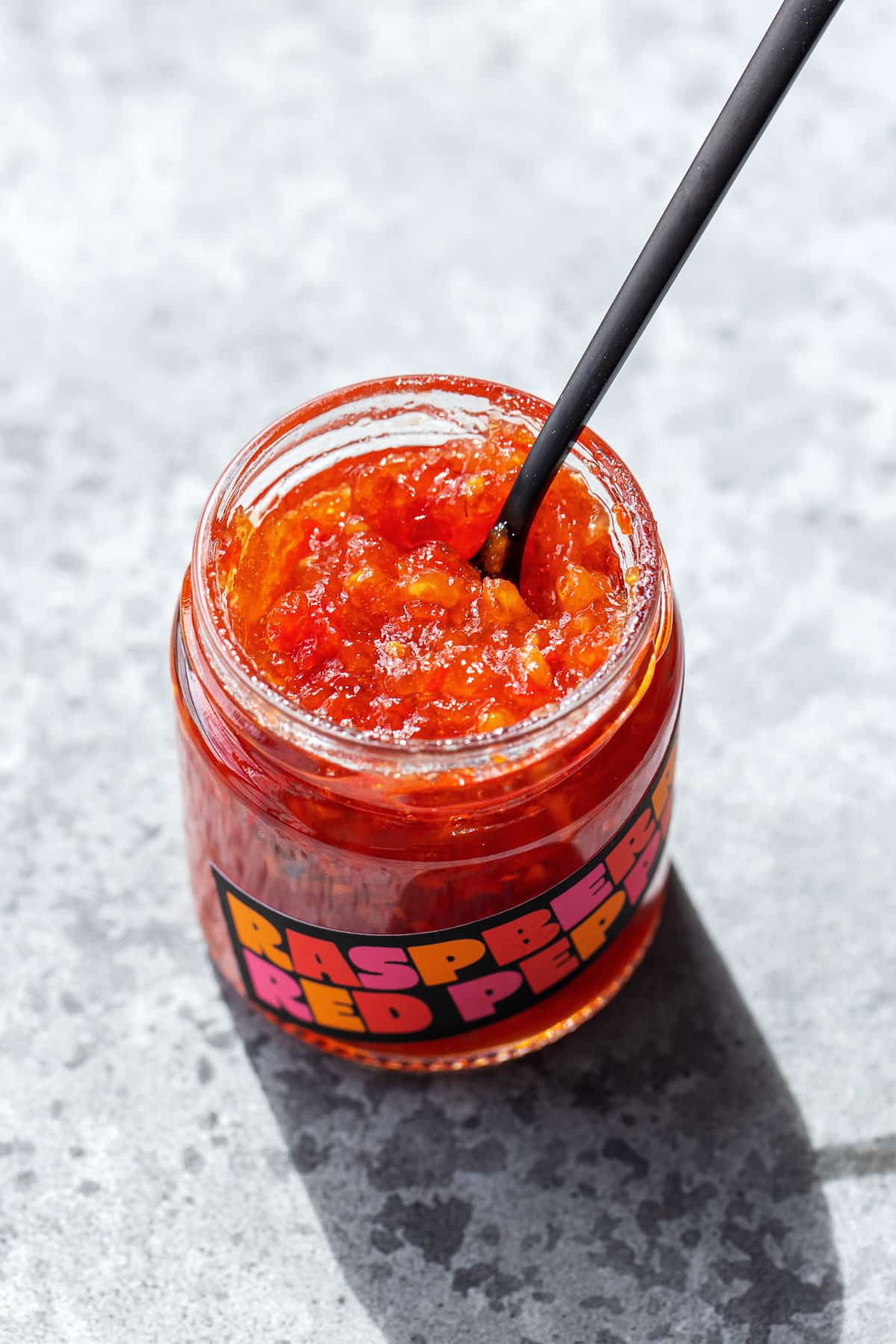
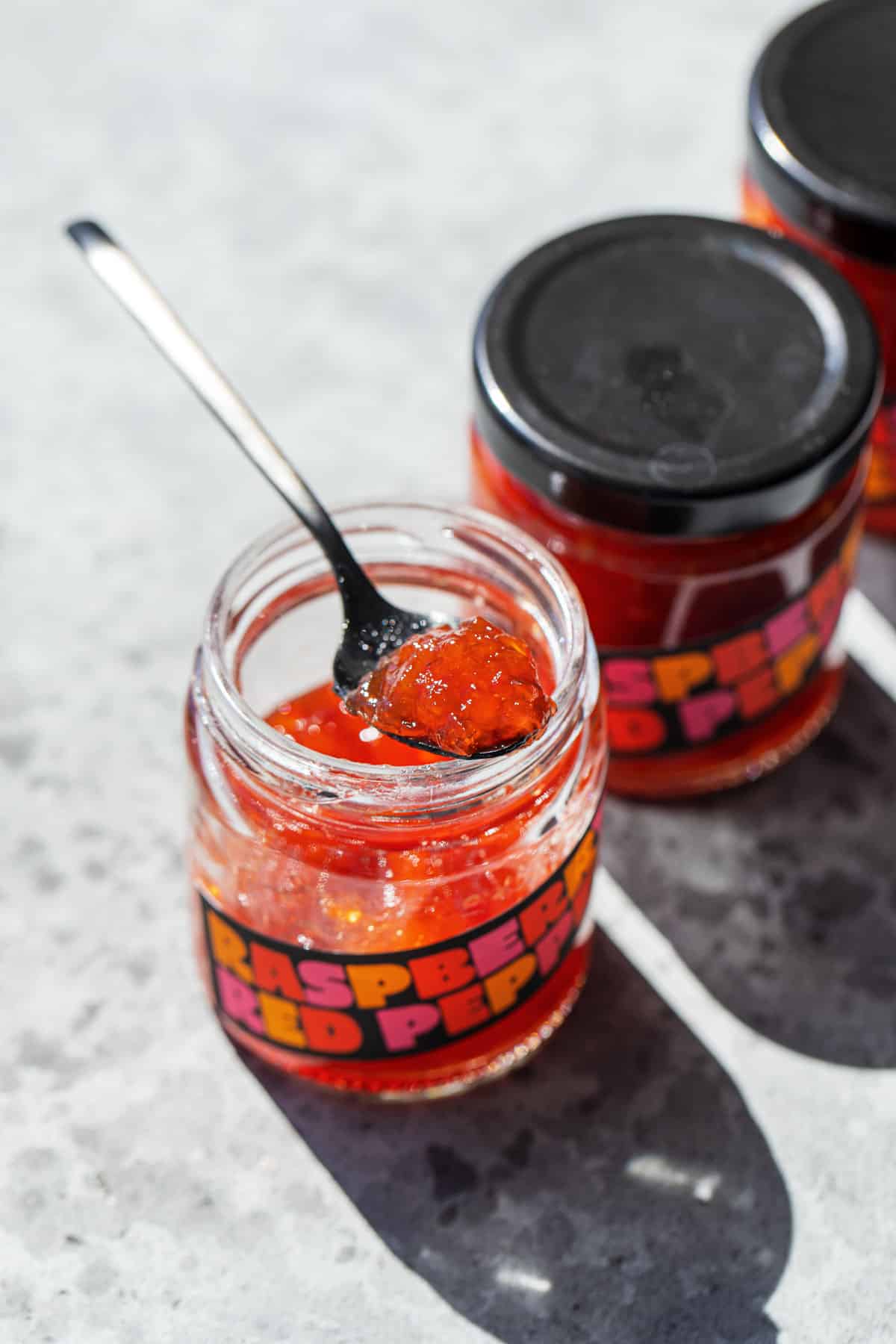
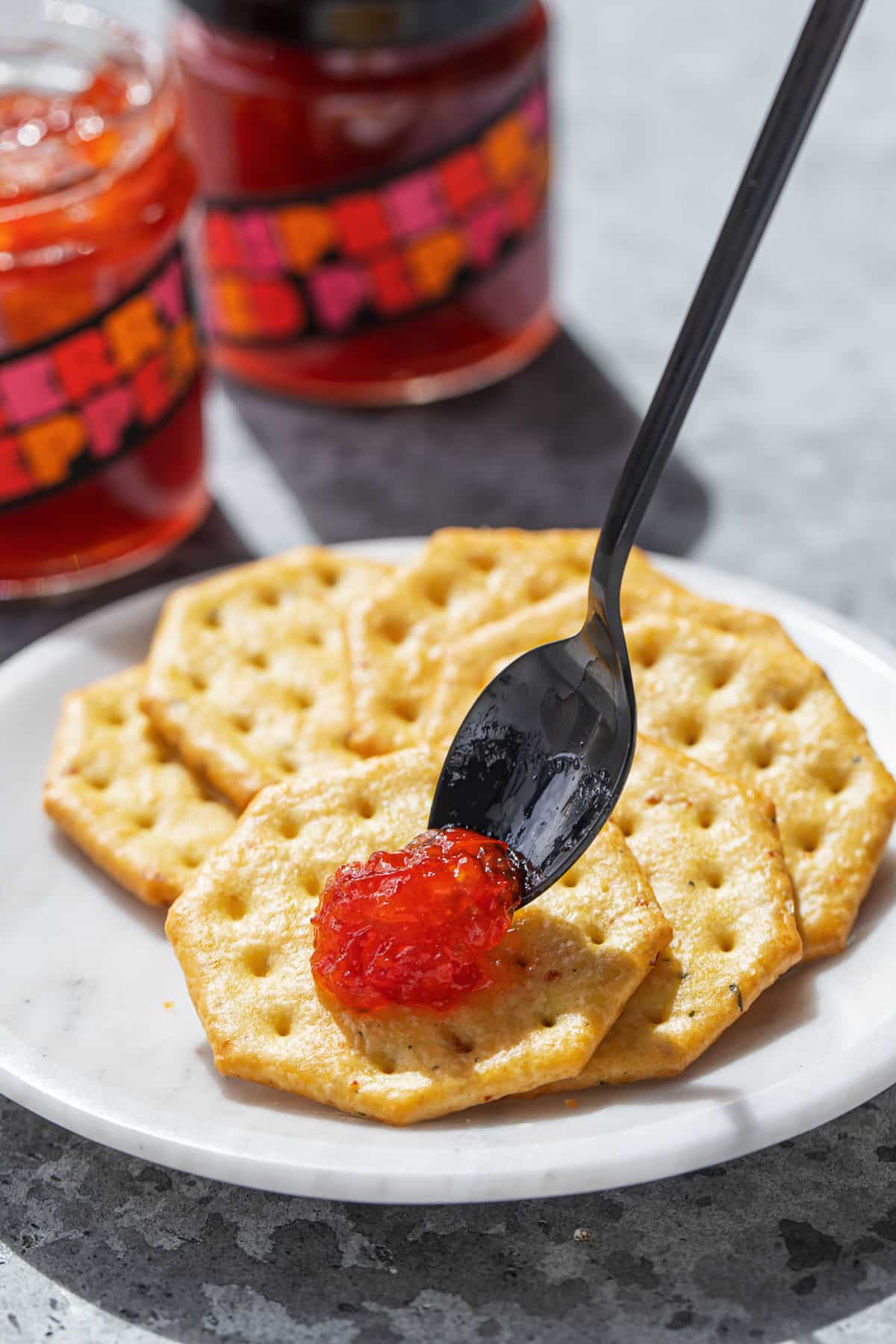
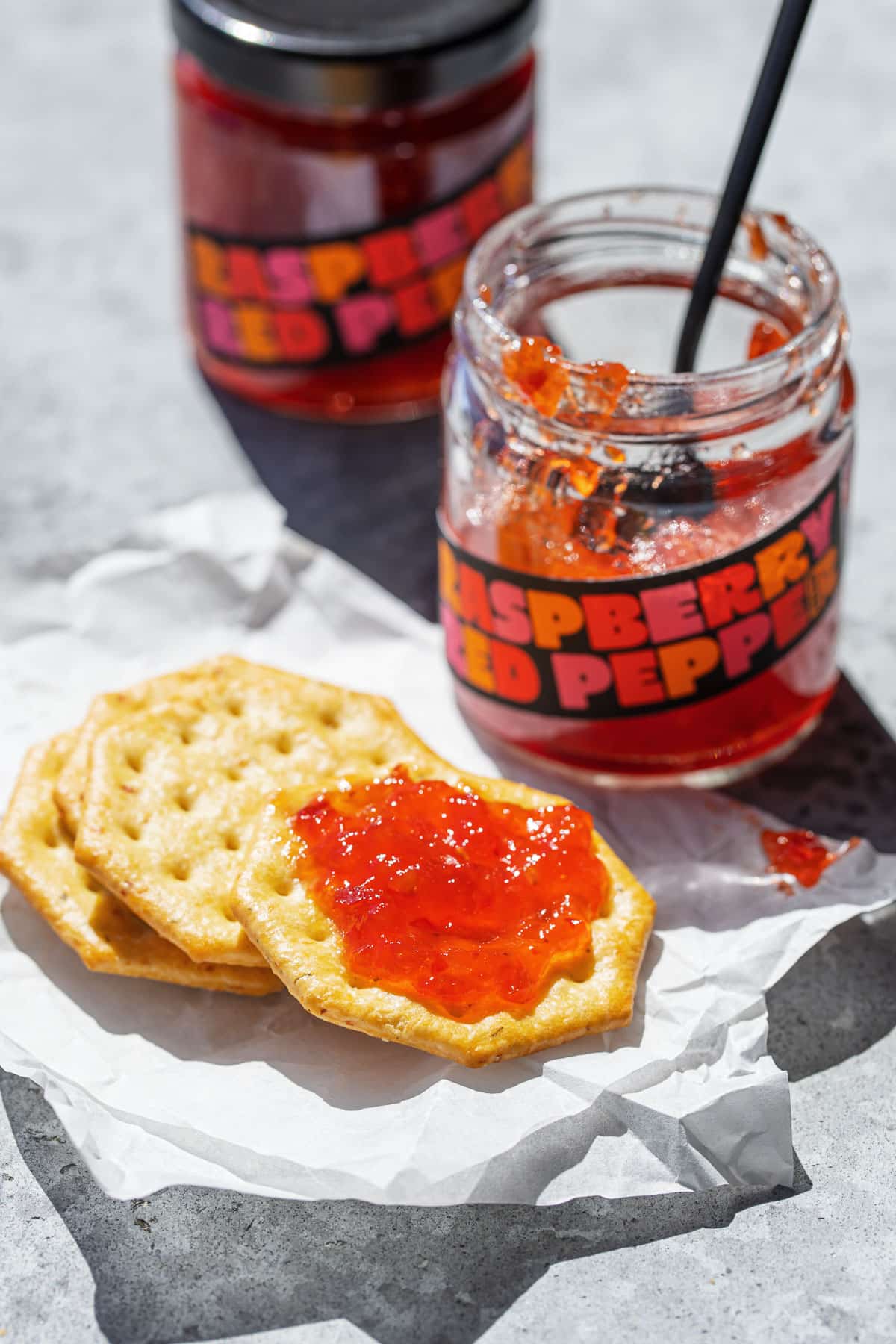
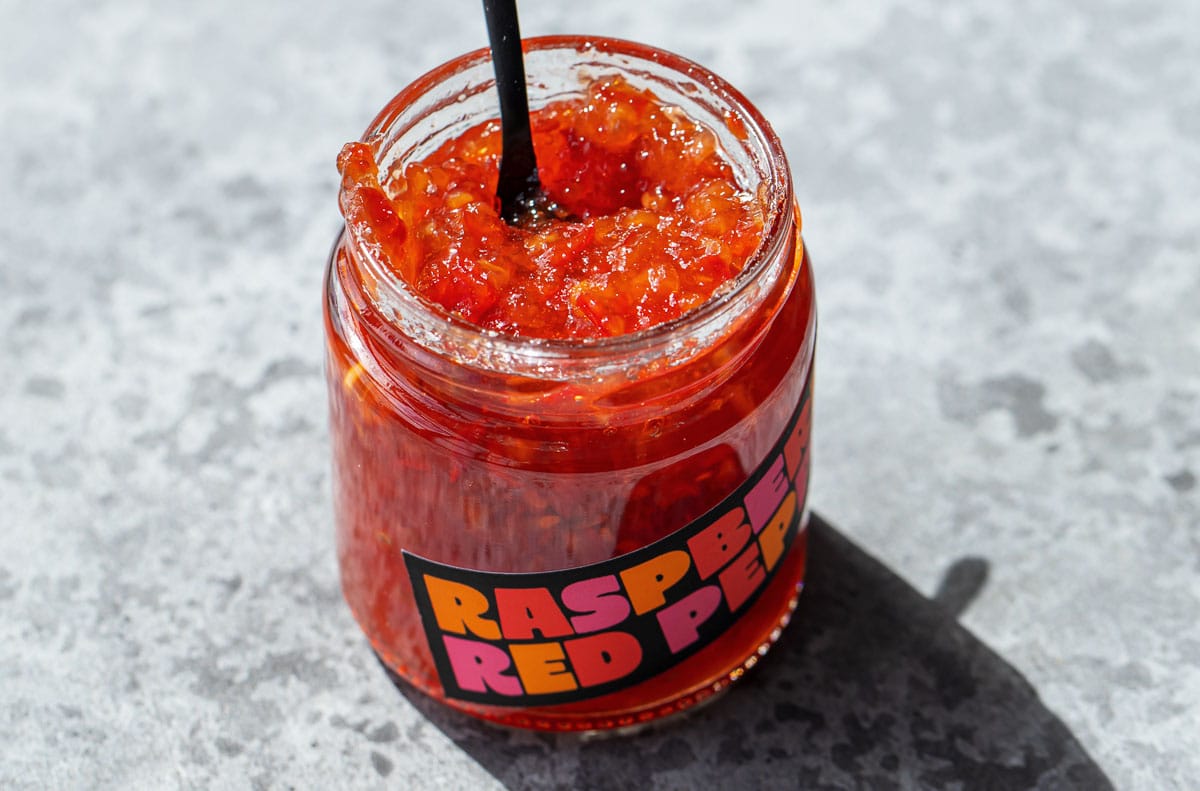
Sweet and spicy and fruity: that’s what this jelly is made of! With just the right amount of spice, balanced with sweetness and fruitiness from the raspberry, it’s a perfect alternative version of an already perfect preserve (honestly pepper jelly is really the only way I enjoy eating peppers these days).
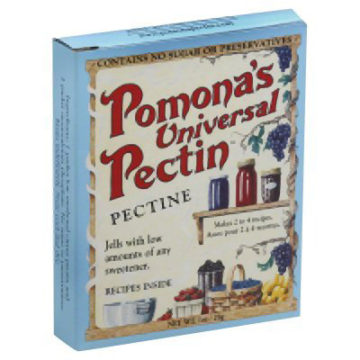
This recipe is made with Pomona’s pectin, which allows us to use about half as much sugar as most traditional pepper jelly recipes. That said, it still uses a good amount of sugar, because otherwise all you’re really tasting is peppers and vinegar. It’s the sugar that brings it all together and mellows out the vinegar too.
(Don’t miss the free printable labels available at the bottom of this post!)
Save this recipe for later!
Let’s be clear: this is not a spicy raspberry jam recipe. This is a true pepper jelly first and foremost, with a hint of raspberry second.
I did a similar twist on pepper jelly a few years back with my Cranberry Pepper Jelly (add it to your Thanksgiving menu and thank me later). The fruit adds such wonderful nuance to the pepper jelly, especially since peppers on their own are mostly spice with not a ton of underlying flavor.
I actually think this same process would work for blackberries, blueberries, or even strawberries too!
Feel the heat.
Making pepper jelly always feels like playing darts blindfolded… will 4 red jalapeños be spicy enough? Will I even taste them, or will they burn my tongue off? And you can’t really taste as you go, either, since the jam is just pepper and vinegar until the last few minutes of the process when the remaining sugar is added; and adding more hot peppers at the end isn’t quite the same as they won’t have a chance to soften before it’s time to transfer to jars.
This batch was almost perfect, with a hint of spice on the end that slowly builds the more you eat, but I wanted just a wee bit more. If I had just used 5 jalapeños, it would have had the perfect amount kick without being unpleasant. The thing is, the next time I buy jalapeños they may have a completely different spice level and 5 might be way spicier. You just never know.
It’s definitely a bit of a guessing game, one I always seem to err on the side of less spicy since I will be gifting most of these jars and can’t attest to the spice tolerance of all the recipients.
If you’re unsure just how spicy your hot peppers are, when you cut off the stem, touch the cut piece to your tongue for a few seconds. If you start feeling the burn almost immediately, that’s a sign of a pretty spicy pepper, and maybe you only want to use 3 to 5 unless you are wanting a noticeable burn. But if you don’t get much burn or just a tiny bit, that indicates a milder pepper and 5 or 6 or even 7 would probably be just fine!
I know, I know, that’s like, the most vague instruction ever, but it’s really all I can give you since peppers very so much with regards to spice levels, even within the same varieties. Trust your tongue and trust your gut, and if you end up with a super spicy batch I’m sure you won’t have trouble giving it away to your spiciest acquaintance.
Overall you will need 1 ½ cups of finely chopped peppers, but the proportion of sweet vs spicy peppers, and precisely which varieties of peppers you use is up to you. I recommend ¼ to ½ cup of finely chopped spicy peppers, then sweet peppers for the rest.
When choosing peppers, I recommend sticking to red or orange peppers for this recipe. Using green peppers together with the red raspberries will make your jelly an unappealing brown color.
Pick your vinegar.
Normally I use apple cider vinegar in my pepper jelly, but this time I opted for red wine vinegar as a nod to the fruity nature of the raspberries. The result was actually quite lovely!
As long as your vinegar says 5% acidity on the label, you can use any kind you want: cider, red or white wine, or plain white vinegar. But it must say 5% acidity! That’s critical for canning safety, especially since we’re using a low-acid ingredient like peppers here.
Sugar me sweet.
This recipe is made with Pomona’s pectin, which lets us use a significantly lower amount of sugar overall, about 2 1½ cups of sugar per 1 ½ cups of finely chopped peppers.
I know it sounds like a lot, but traditional pectin recipes call for almost twice that, nearly 5 cups of sugar for the same amount of peppers.
While this recipe does have quite a bit less sugar than many other recipes, I do not recommend reducing it further or you’re going to end up with an overwhelmingly vinegary flavor. The sugar helps balance the spice, yes, but it also mellows the vinegar taste, so it’s really a necessary part of pepper jelly.
Here’s how to make it:
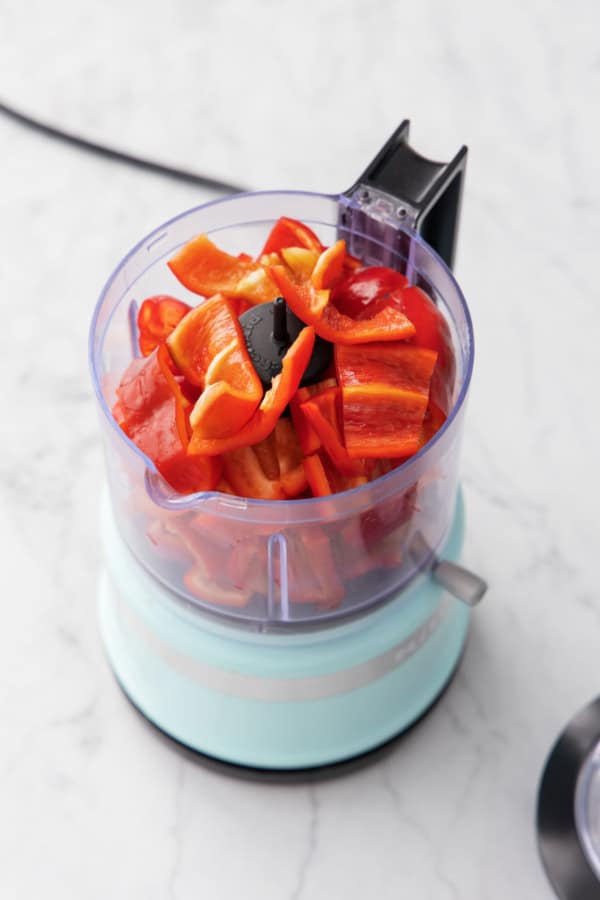
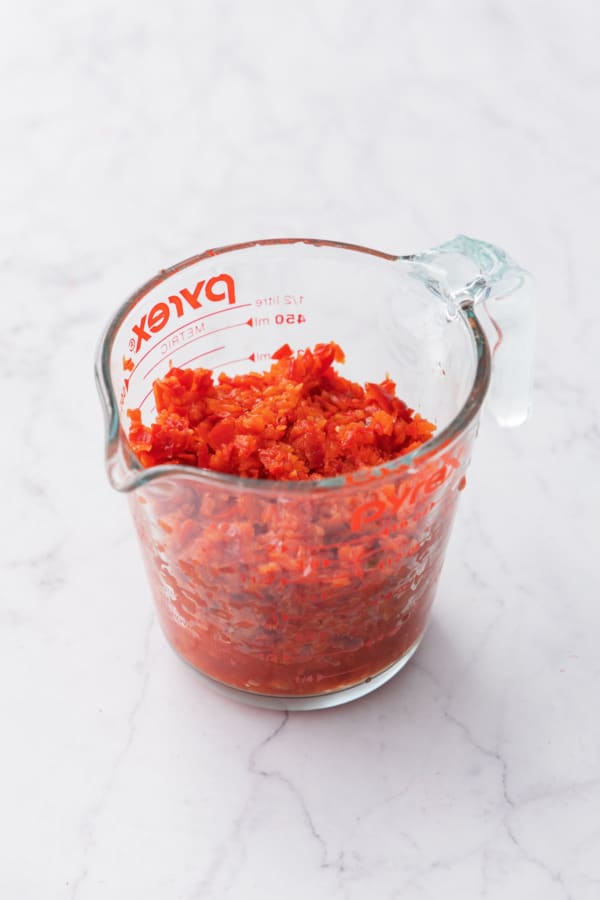
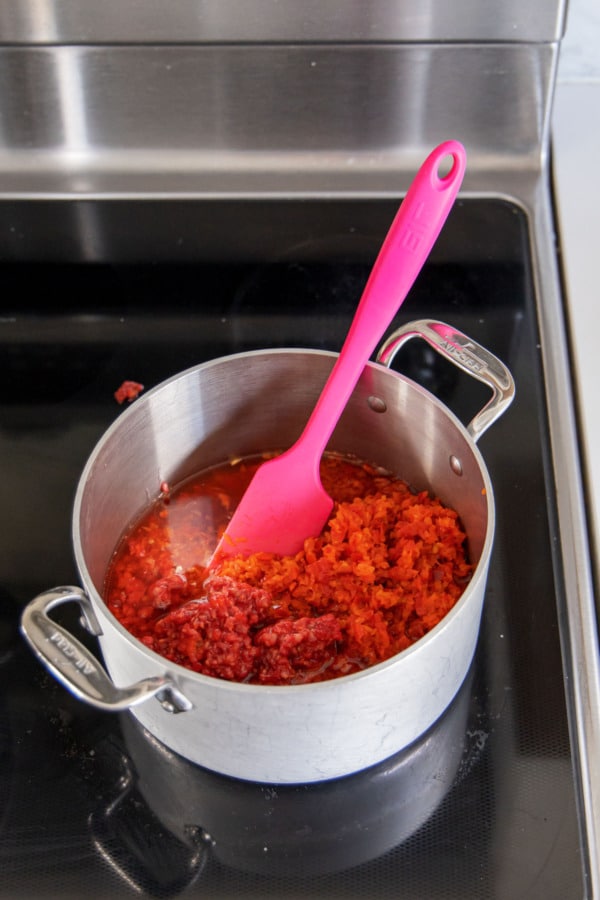
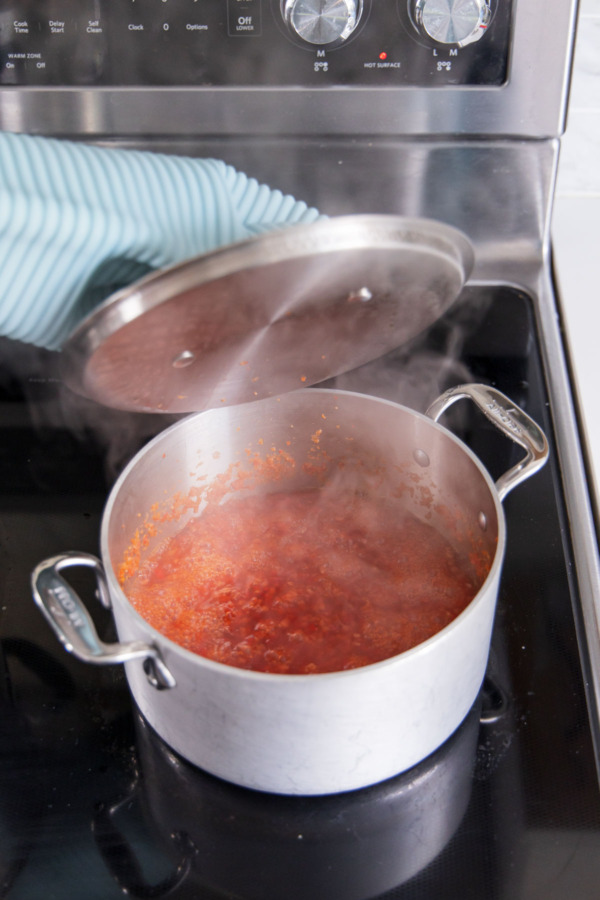
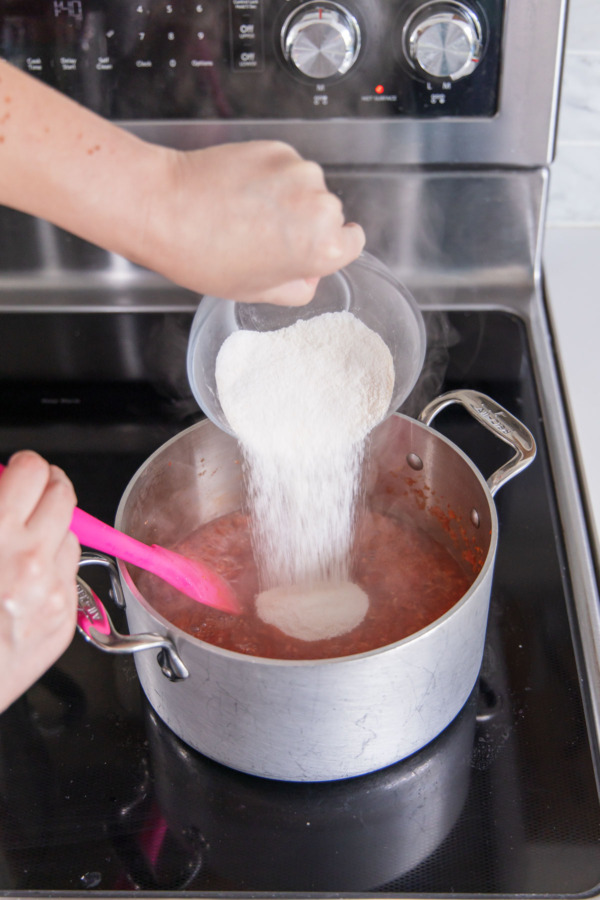
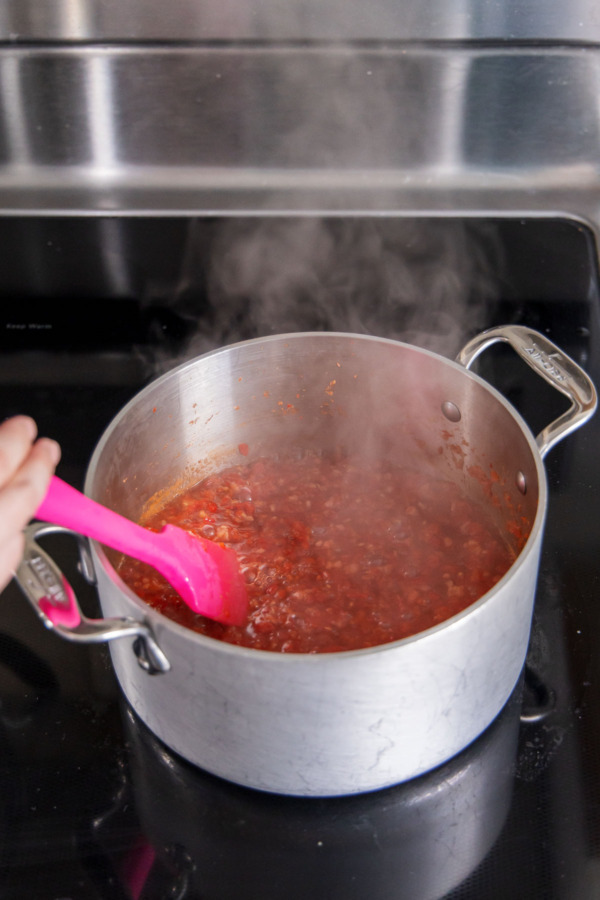
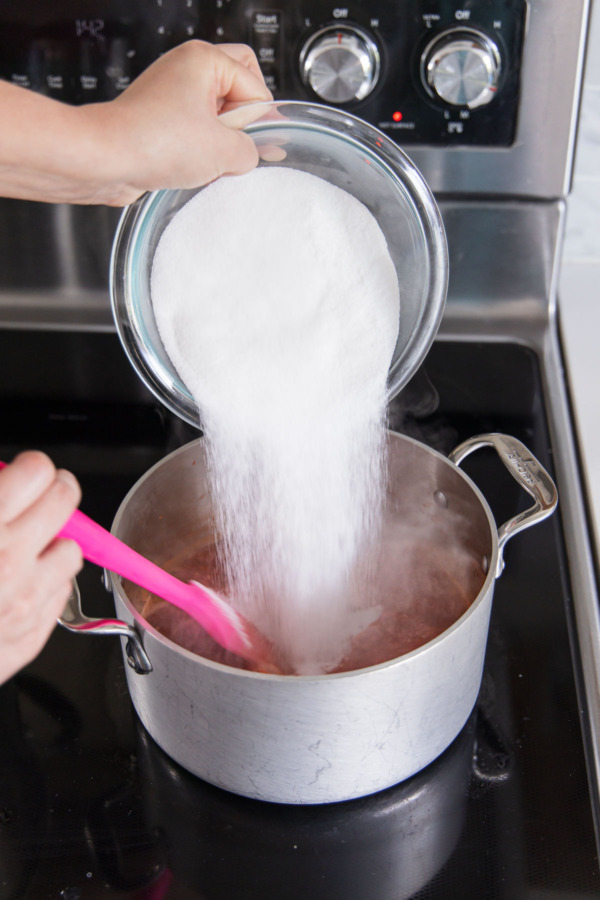
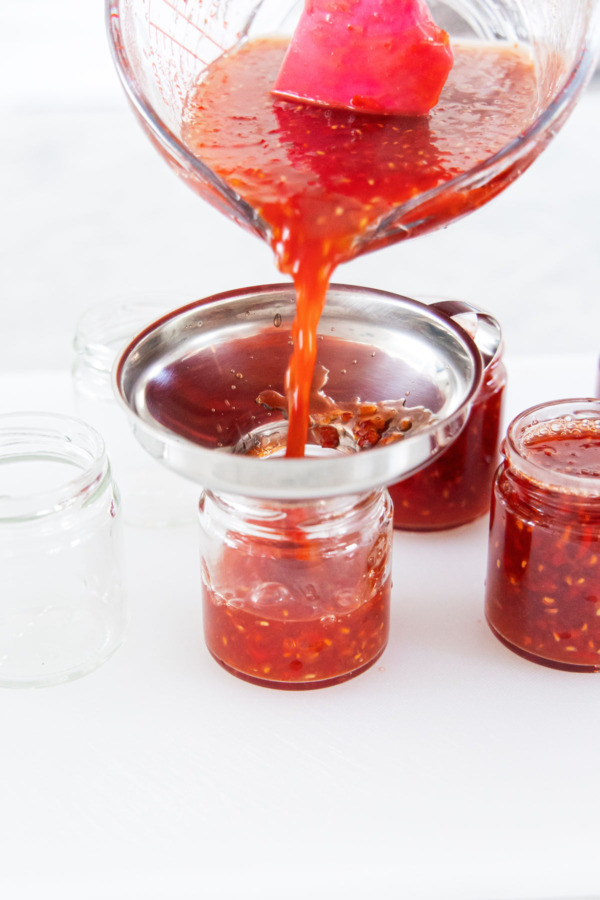
Notice that the sugar is added in two additions. The first ½ cup is whisked with the pectin powder, then added to the boiling pepper and vinegar mixture. This is important since Pomona’s will only properly dissolve in a lower sugar environment.
Then, once the mixture returns to a full rolling boil, then we add the remaining 2 cups of sugar all at once, stirring vigorously until it is completely dissolved. Let it come back to a full boil once more, then you can remove it from the heat and fill your jars.
This recipe is written for home water bath canning methods; properly sealed, the jelly will keep in a cool, dark place for up to 1 year. Some color loss is normal (lower sugar content recipes don’t hold their jewel-like color quite as long as full sugar recipes). Once a jar is opened, refrigerate for up to 2 weeks.
Don’t want to can? You can also refrigerate the jelly for up to 2 weeks or freeze it for up to a year (be sure to leave room in the jars for expansion).
Adapting for different pectins.
This recipe was written for Pomona’s pectin, which is a unique low-sugar pectin that requires calcium to set, rather than sugar. This allows us to use much less sugar than traditional pepper jelly recipes.
Pomona’s is what is considered an LM pectin, and there are other brands/varieties of LM pectin out there that should work in this recipe. However, some incorporate calcium into the pectin itself rather than a separate addition like Pomona’s (usually it will say “calcium built in” if so), and the quantities and concentrations may be different for different brands.
If you want to substitute a different kind of LM pectin, refer to the information sheet that came with your pectin. If there is no recipe for pepper jelly there, check the brand’s website and see if they offer a basic recipe there. In most cases, like Ball or SureJell low sugar pectins, you are going to need significantly more pectin since they are cut with other ingredients like dextrose and citric acid (likely more like 2 tab. Pomona’s is pure citrus pectin, which is why we need so little of it here.
This recipe cannot be made as written with standard (HM) pectins, as there is not enough sugar present to set the jelly and you’ll end up with pepper sauce instead. If you only have standard pectin on hand, refer to the informational sheet in the box for basic pepper jelly proportions. (One of these days I’ll write a standard pectin pepper jelly recipe, but today is not that day.)
Raspberry Red Pepper Jelly
Ingredients
- 3-4 / 175 g sweet red peppers, seeded and finely chopped (about 1 cup chopped)
- 4-6 / 90 g spicy red peppers, seeded and finely chopped (about ½ cup chopped)
- 6 oz / 170 g fresh or frozen raspberries, mashed (about ¾ cup mashed)
- 1 ¼ cups / 290 g red wine or cider vinegar, 5% acidity
- 2 ½ cups / 500 g granulated sugar, divided
- 2 teaspoons Pomona’s Universal Pectin
- 2 teaspoons calcium water*
Instructions
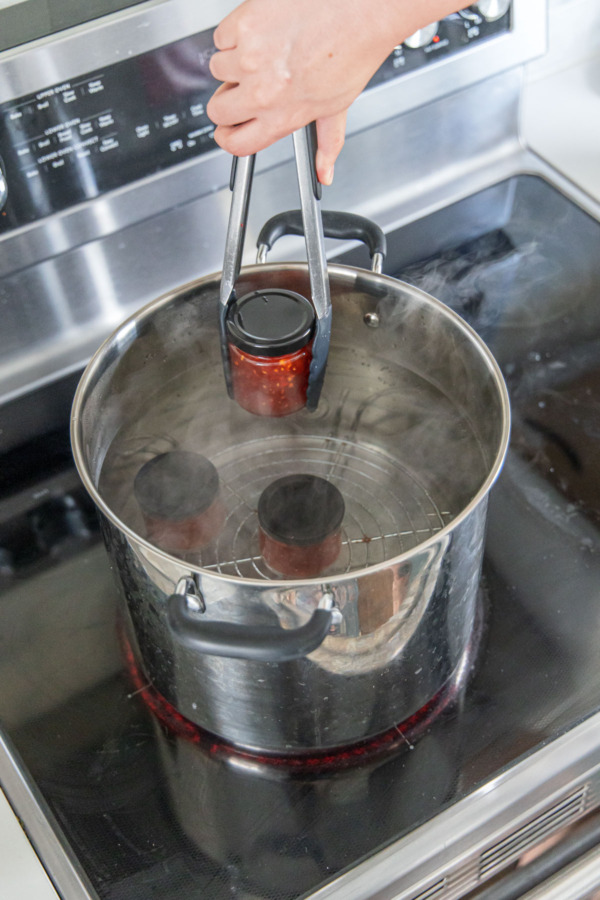
- Fill a large stock pot or canning pot 2/3 full with water; place a rack of some sort in the bottom and place over medium-high heat. Wash/sterilize your jars and submerge in water bath as it heats. The pot should be just about boiling by the time the jam is ready to go. Keep jars in hot (not boiling) water until ready to use.
- To prepare peppers, remove stems and seeds and chop finely. You can vary the proportion of sweet and spicy peppers, or even use entirely sweet peppers, as long as you have a total of 1 1/2 cups of finely chopped pepper.
- To prepare raspberries, wash well, then mash with a potato masher or the back of a spoon until you have a chunky mashed mixture. You should have about ¾ cup of mashed fruit.
- Combine peppers, raspberries, and vinegar in a heavy saucepan set over medium heat. Cover and simmer, stirring occasionally, for 10 minutes to soften the peppers.
- In a bowl, whisk together ½ cup sugar and pectin powder until evenly incorporated; set aside the remaining 2 cups of sugar, you'll add that later.
- Add calcium water to pepper mixture and increase heat to medium-high; bring to a full rolling boil, then whisk in sugar/pectin mixture, stirring vigorously until completely dissolved and mixture returns to a boil.
- Once it returns to a full rolling boil, stir in remaining 2 cups of sugar stirring vigorously until sugar is completely dissolved.
- Return to once more to a full boil that can't be stirred down, then remove from heat. Optionally you can test your set at this time by dropping a bit onto a frozen spoon and returning to the freezer for 1 minute.
- Ladle jam into hot jars, leaving 1/4-inch of head space. Wipe jar rims and screw on lids. Process in boiling water for 10 minutes, then transfer to a wire rack to cool completely. Check seals. Any unsealed jars should be refrigerated and used within 3 weeks.
Notes
- Calcium powder to make calcium water is included with the Pomona’s brand pectin (follow instructions included in the box).
Did you make this recipe?
Let us know what you think! Leave a Review below or share a photo and tag me on Instagram with the hashtag #loveandoliveoil.Bonus Printable Labels
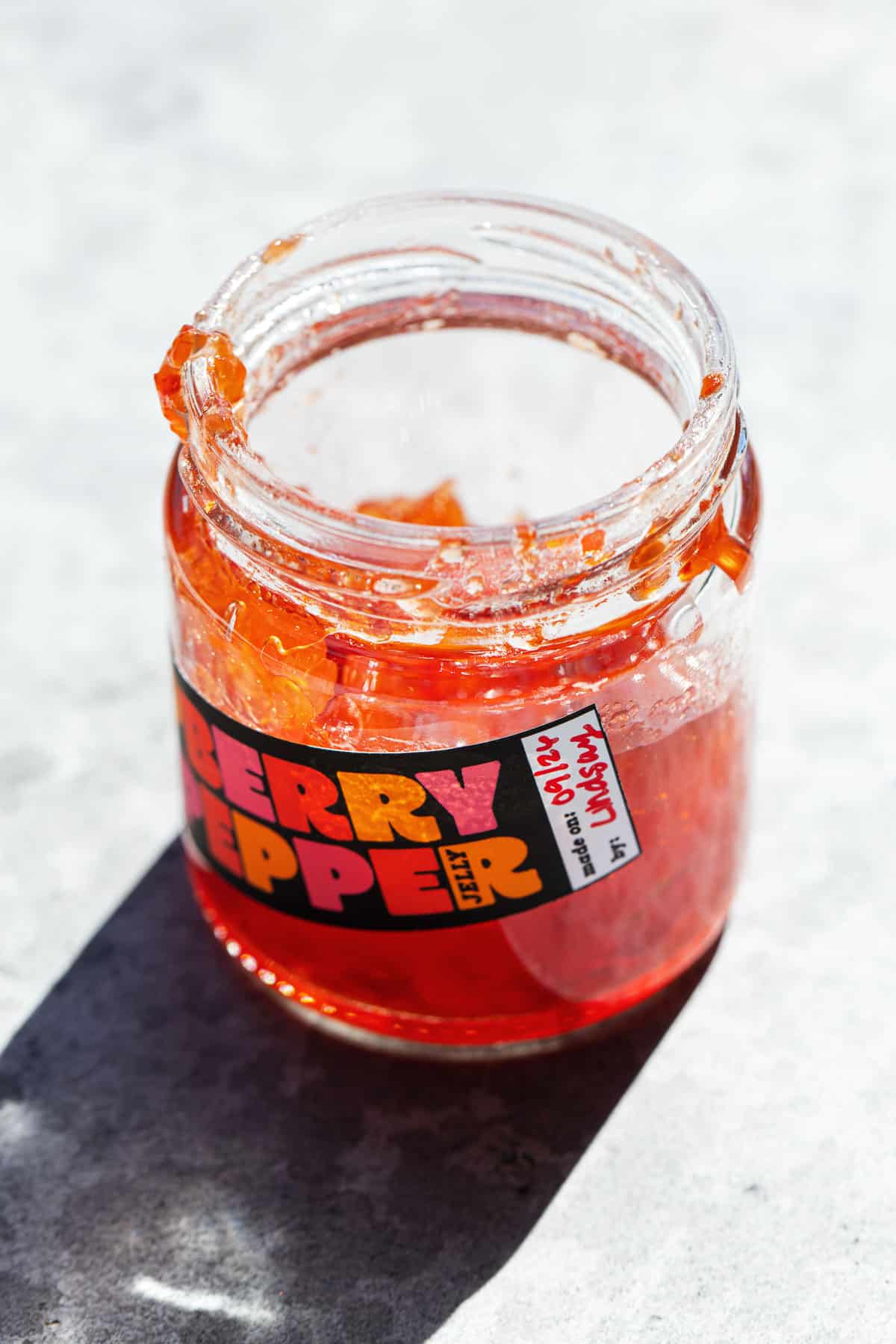
Homemade pepper jelly is perfect for gifting: complete the package with these eye-catching printable labels!
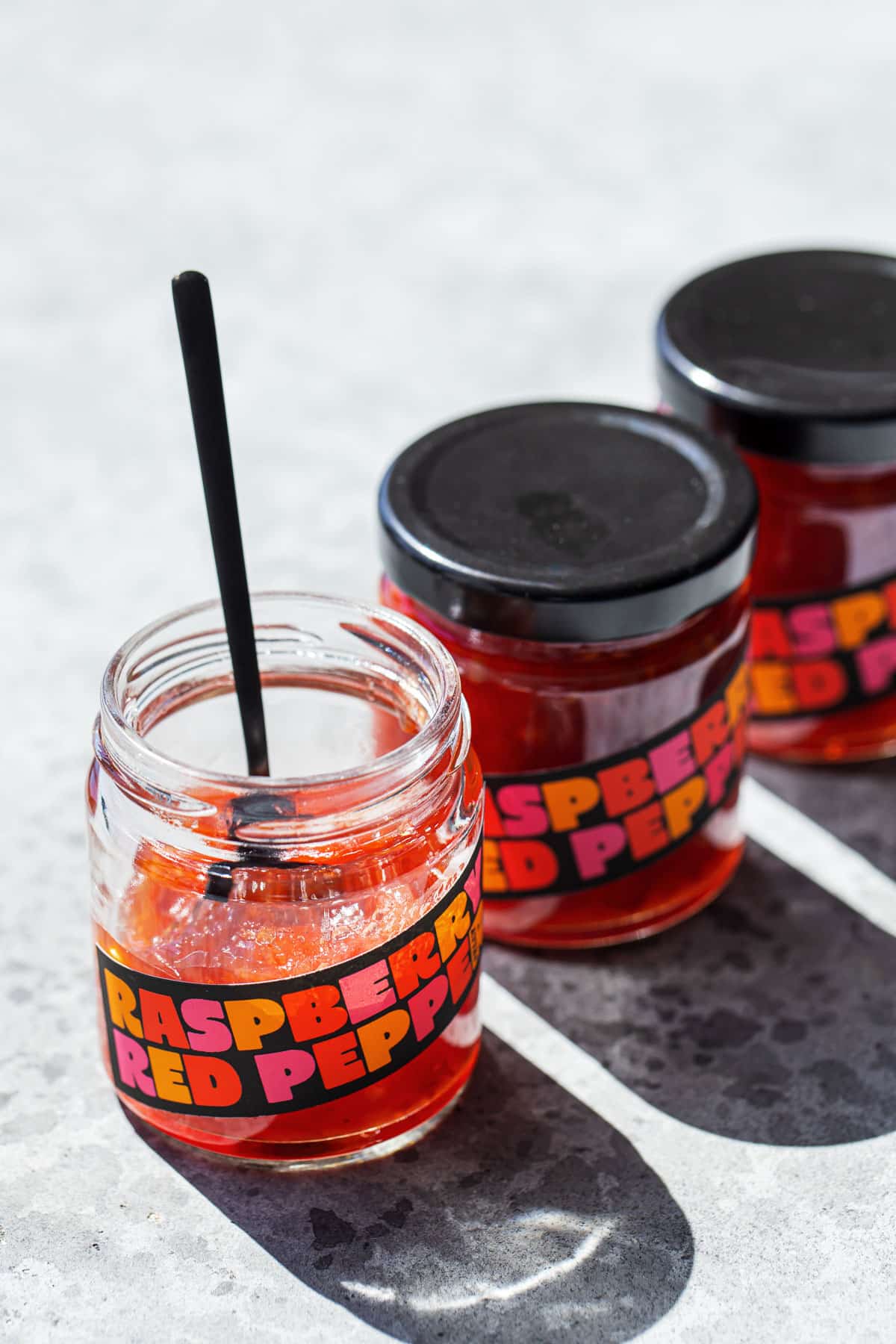
I designed these rectangle band labels to fit the sides of most smooth-sided jars (and if you want hang tags, print onto cardstock and poke a hole in one side/corner).
The downloadable PDF file contains 18 labels per page, including space to write your name and the date.
To use, simply download the printable file by completing the form below. Print your labels onto full-sheet sticker paper, cut out shapes, and apply directly to the (canned and cooled) jars.